WHERE TO GO / HOW TO START
What type of care facility should I use?
Current sources: Google, Friends ❌
Opportunity: Sydney App triage feature ✓
I led a service design project to understand why international students struggle to navigate the U.S. healthcare system, and to redesign how their insurer's digital tools support them across the entire care journey.
Healthcare
Role
Duration
Client

Healthcare
I led a service design project to understand why international students struggle to navigate the U.S. healthcare system, and to redesign how their insurer's digital tools support them across the entire care journey.
Role
Duration
Client
Problem
International students face challenges navigating the U.S. healthcare system, including information gaps and communication barriers. Many struggle with medical terminology, and non-native English speakers find it difficult to understand healthcare processes. Additionally, unclear appointment procedures and concerns about costs often lead them to delay necessary care, causing minor health issues to worsen into serious conditions requiring emergency intervention.
Solution
We redesigned the healthcare journey across three platforms: Anthem's Sydney app, SCAD's student app, and orientation materials. We added multilingual support (14 languages), AI-guided symptom triage, upfront cost estimation, and peer-driven Language Buddy system. We prototyped everything in Figma through 3 rounds of testing with students, validating every interaction before final implementation.
Healthcare Community


9:41
Home
Appointment
Care
Benefits
Account

ID Cards
WELCOME
EN
Abe Hou
My Benefits
Need Action
0% Complete
View All
Know where to go for care
Choose your primary care physician
Understand your benefits


EN
ZH
ES
DE
AR
Artifacts Glimpse
We made around 13 service design artifacts for this projects and each one of those taught us a lot, helped us uncover, understand and take steps at each stages.
Patient
Partner Health Facilitator
Therapist
Sydney App
Translator
Insurer (Anthem)
Governance
Development
Pharmacy
Design Team
Independent Health Facilitator
Peers
College
ISSO
Improved Usability
User Centred Design
Optimized Waiting Period
~60mins
Optimized Waiting Period
User Centred Design
User Centred Design
Clear Information & Booking Details
Feedback Loop
Peer
Navigators
University Health Center
Healthcare
Hotline
ISSO
Educational Tools for ISSO
Local Hospitals
Regulatory & Compliance Bodies
Insurance Company and associated Parties
Sydney App
Coverage Snapshot Widget
AI Chatbot & Symptom Checker
Language Translation Assistance
Wait Time Estimation & Scheduling
International Students
University
Healthcare Facilitator
Governance & Oversight
Insurer
Offers 24/7, multilingual AI support
Automates wait-time
Q&A handles symptom triage
View of benefits, co-pay rates
Students help with process and Q&A’s
Tools to organize sessions and tours
Students help with process and Q&A’s
Basic First Aid and medical help provided
Initial Knowledge sharing about medical facilities
Health data & Documentation Exchange
User data, hospital network and coverage detail exchange
Doctors and Medical Staff
Pharmacy Network
Prescription
Health & insurance data exchange
Medicines
Regulatory updates and information exchange
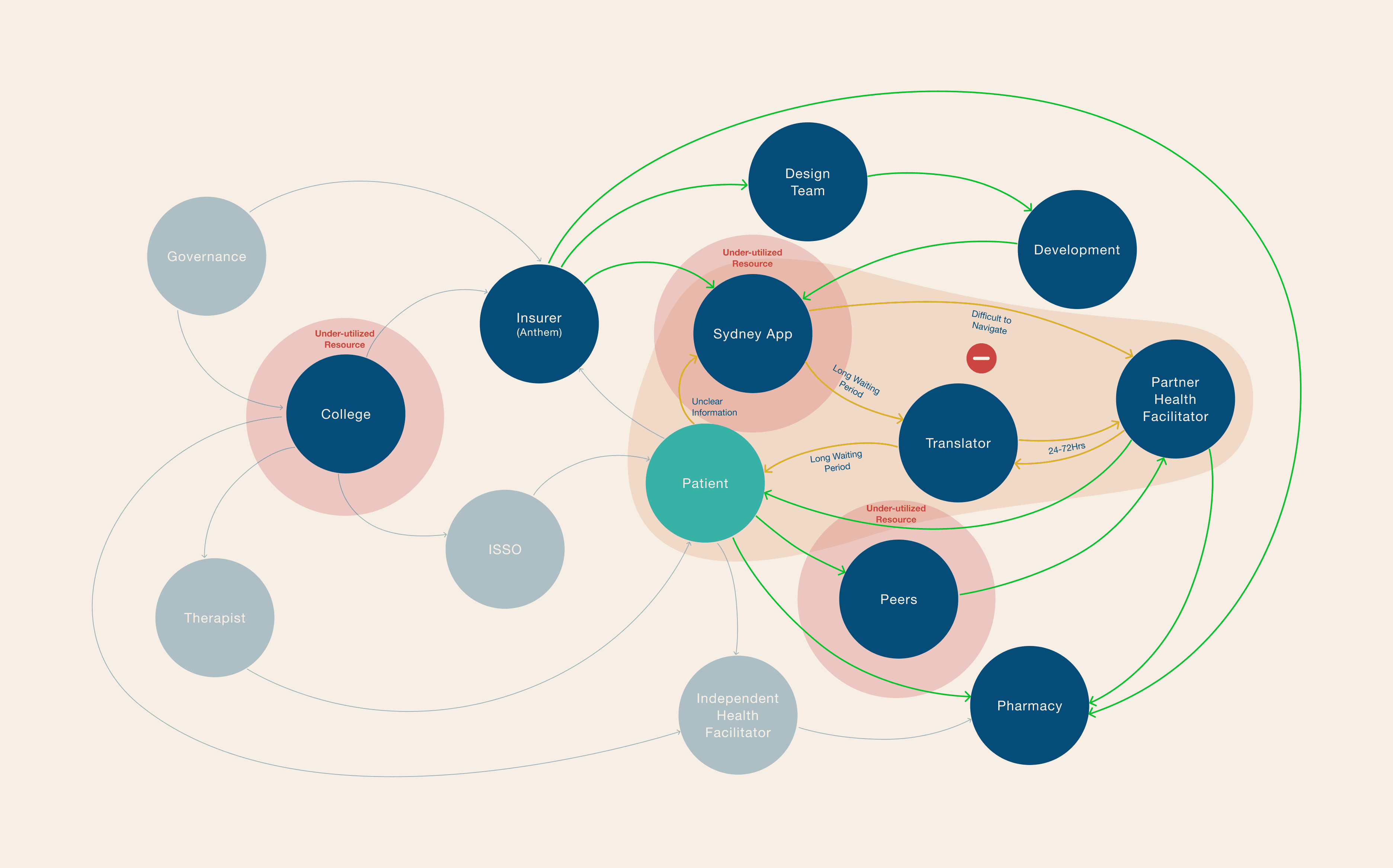
Ecosystem Map
Threefold Typology Map
BM
BM
BM
BM
BM
0
0/0
Emotional Journey
Process Effort
Discomfort
Discomfort
Check-in
Check-in
Doctor’s Visit
Doctor’s Visit
Check-out
Check-out
Billing
Billing
Booking
Booking
“Ugh, I don’t feel so good”
“Tracking symptoms is so easy with this”
“Oh wow! this makes my life 10X Easy!”
“Booking done!”
“Hush, I just need to wait for 15 mins!”
“Thank god I could get a Translator in time!”
“That was easy”
“Done!”
Conceive sickness
Easy Symptom Tracking
Auto-Suggest Doctor
Easy Booking
Wait time Prediction
Translation Services
Confirm Details
Make Payment
ERRAC Framework
0
1
2
3
4
5
6
7
8
9
10
Improve Competitiveness by co-ordinated service innovation
Service Blueprint
Patient
Partner Health Facilitator
Therapist
Sydney App
Translator
Insurer (Anthem)
Governance
Development
Pharmacy
Design Team
Independent Health Facilitator
Peers
College
ISSO
Improved Usability
User Centred Design
Optimized Waiting Period
~60mins
Optimized Waiting Period
User Centred Design
User Centred Design
Clear Information & Booking Details
Feedback Loop
Peer
Navigators
University Health Center
Healthcare
Hotline
ISSO
Educational Tools for ISSO
Local Hospitals
Regulatory & Compliance Bodies
Insurance Company and associated Parties
Sydney App
Coverage Snapshot Widget
AI Chatbot & Symptom Checker
Language Translation Assistance
Wait Time Estimation & Scheduling
International Students
University
Healthcare Facilitator
Governance & Oversight
Insurer
Offers 24/7, multilingual AI support
Automates wait-time
Q&A handles symptom triage
View of benefits, co-pay rates
Students help with process and Q&A’s
Tools to organize sessions and tours
Students help with process and Q&A’s
Basic First Aid and medical help provided
Initial Knowledge sharing about medical facilities
Health data & Documentation Exchange
User data, hospital network and coverage detail exchange
Doctors and Medical Staff
Pharmacy Network
Prescription
Health & insurance data exchange
Medicines
Regulatory updates and information exchange
Ecosystem Map
Threefold Typology Map
BM
BM
BM
BM
BM
0
0/0
Emotional Journey
Process Effort
Discomfort
Discomfort
Check-in
Check-in
Doctor’s Visit
Doctor’s Visit
Check-out
Check-out
Billing
Billing
Booking
Booking
“Ugh, I don’t feel so good”
“Tracking symptoms is so easy with this”
“Oh wow! this makes my life 10X Easy!”
“Booking done!”
“Hush, I just need to wait for 15 mins!”
“Thank god I could get a Translator in time!”
“That was easy”
“Done!”
Conceive sickness
Easy Symptom Tracking
Auto-Suggest Doctor
Easy Booking
Wait time Prediction
Translation Services
Confirm Details
Make Payment
ERRAC Framework
0
1
2
3
4
5
6
7
8
9
10
Improve Competitiveness by co-ordinated service innovation
Service Blueprint
Patient
Partner Health Facilitator
Therapist
Sydney App
Translator
Insurer (Anthem)
Governance
Development
Pharmacy
Design Team
Independent Health Facilitator
Peers
College
ISSO
Improved Usability
User Centred Design
Optimized Waiting Period
~60mins
Optimized Waiting Period
User Centred Design
User Centred Design
Clear Information & Booking Details
Feedback Loop
Peer
Navigators
University Health Center
Healthcare
Hotline
ISSO
Educational Tools for ISSO
Local Hospitals
Regulatory & Compliance Bodies
Insurance Company and associated Parties
Sydney App
Coverage Snapshot Widget
AI Chatbot & Symptom Checker
Language Translation Assistance
Wait Time Estimation & Scheduling
International Students
University
Healthcare Facilitator
Governance & Oversight
Insurer
Offers 24/7, multilingual AI support
Automates wait-time
Q&A handles symptom triage
View of benefits, co-pay rates
Students help with process and Q&A’s
Tools to organize sessions and tours
Students help with process and Q&A’s
Basic First Aid and medical help provided
Initial Knowledge sharing about medical facilities
Health data & Documentation Exchange
User data, hospital network and coverage detail exchange
Doctors and Medical Staff
Pharmacy Network
Prescription
Health & insurance data exchange
Medicines
Regulatory updates and information exchange
Ecosystem Map
Threefold Typology Map
BM
BM
BM
BM
BM
0
0/0
Emotional Journey
Process Effort
Discomfort
Discomfort
Check-in
Check-in
Doctor’s Visit
Doctor’s Visit
Check-out
Check-out
Billing
Billing
Booking
Booking
“Ugh, I don’t feel so good”
“Tracking symptoms is so easy with this”
“Oh wow! this makes my life 10X Easy!”
“Booking done!”
“Hush, I just need to wait for 15 mins!”
“Thank god I could get a Translator in time!”
“That was easy”
“Done!”
Conceive sickness
Easy Symptom Tracking
Auto-Suggest Doctor
Easy Booking
Wait time Prediction
Translation Services
Confirm Details
Make Payment
ERRAC Framework
0
1
2
3
4
5
6
7
8
9
10
Improve Competitiveness by co-ordinated service innovation
Service Blueprint
Patient
Partner Health Facilitator
Therapist
Sydney App
Translator
Insurer (Anthem)
Governance
Development
Pharmacy
Design Team
Independent Health Facilitator
Peers
College
ISSO
Improved Usability
User Centred Design
Optimized Waiting Period
~60mins
Optimized Waiting Period
User Centred Design
User Centred Design
Clear Information & Booking Details
Feedback Loop
Peer
Navigators
University Health Center
Healthcare
Hotline
ISSO
Educational Tools for ISSO
Local Hospitals
Regulatory & Compliance Bodies
Insurance Company and associated Parties
Sydney App
Coverage Snapshot Widget
AI Chatbot & Symptom Checker
Language Translation Assistance
Wait Time Estimation & Scheduling
International Students
University
Healthcare Facilitator
Governance & Oversight
Insurer
Offers 24/7, multilingual AI support
Automates wait-time
Q&A handles symptom triage
View of benefits, co-pay rates
Students help with process and Q&A’s
Tools to organize sessions and tours
Students help with process and Q&A’s
Basic First Aid and medical help provided
Initial Knowledge sharing about medical facilities
Health data & Documentation Exchange
User data, hospital network and coverage detail exchange
Doctors and Medical Staff
Pharmacy Network
Prescription
Health & insurance data exchange
Medicines
Regulatory updates and information exchange
Ecosystem Map
Threefold Typology Map
BM
BM
BM
BM
BM
0
0/0
Emotional Journey
Process Effort
Discomfort
Discomfort
Check-in
Check-in
Doctor’s Visit
Doctor’s Visit
Check-out
Check-out
Billing
Billing
Booking
Booking
“Ugh, I don’t feel so good”
“Tracking symptoms is so easy with this”
“Oh wow! this makes my life 10X Easy!”
“Booking done!”
“Hush, I just need to wait for 15 mins!”
“Thank god I could get a Translator in time!”
“That was easy”
“Done!”
Conceive sickness
Easy Symptom Tracking
Auto-Suggest Doctor
Easy Booking
Wait time Prediction
Translation Services
Confirm Details
Make Payment
ERRAC Framework
0
1
2
3
4
5
6
7
8
9
10
Improve Competitiveness by co-ordinated service innovation
Service Blueprint
My Role & Responsibilities
Led ecosystem mapping to identify pain points across ISSO, Sydney App, healthcare providers, and peer networks.
Created current-state and future-state service blueprints and stakeholder ecosystem diagrams.
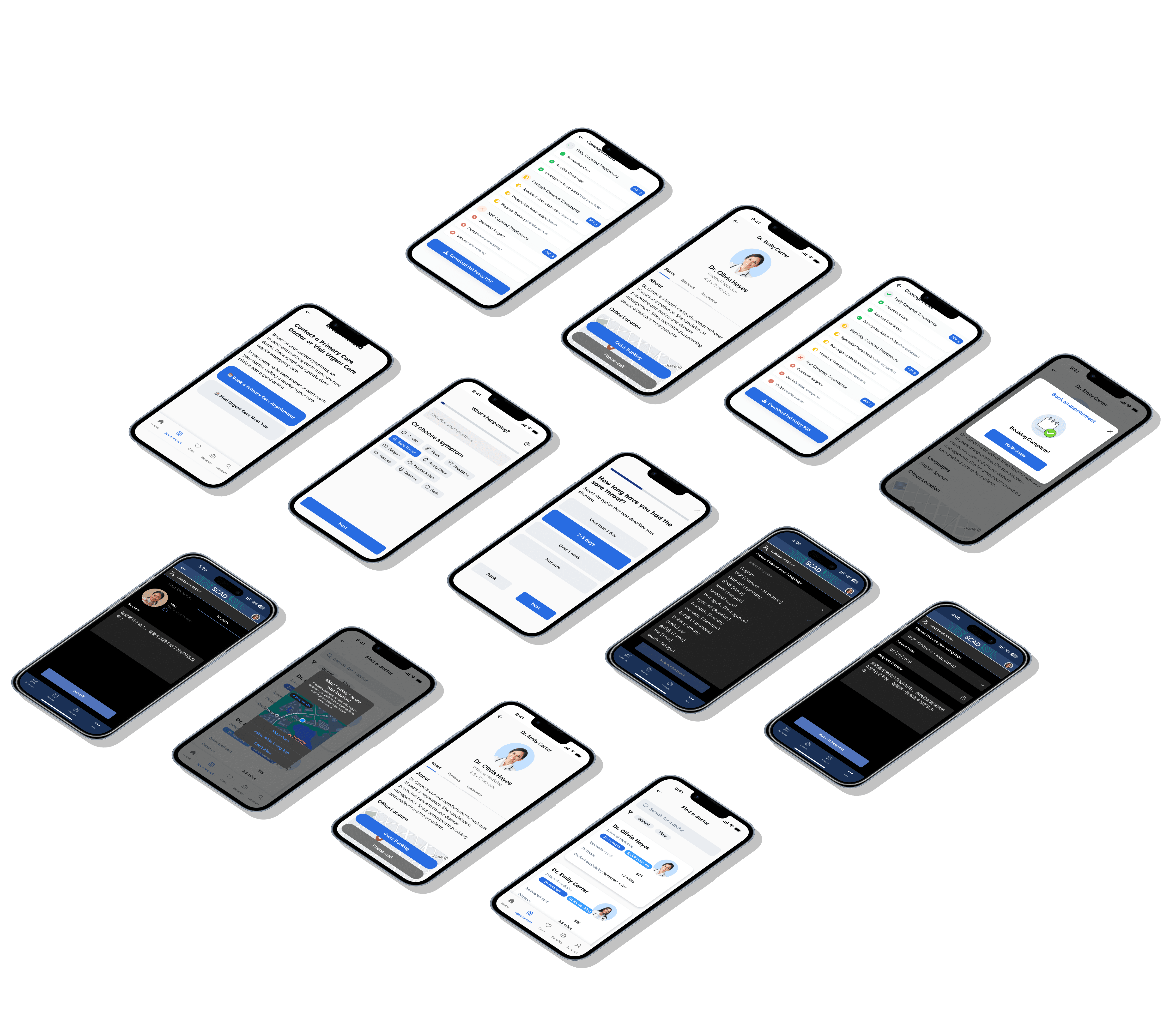
Designed mobile screens for Sydney app redesign and SCAD Healthcare Community feature.
A few things to know before we kickoff
1. International Student Population
i. 1.1M+ students in U.S.
2. What Is Anthem?
i. Large U.S. health insurance company
ii. Provides mandatory Student Advantage plan for F-1 visa students
3. What Is Sydney Health App?
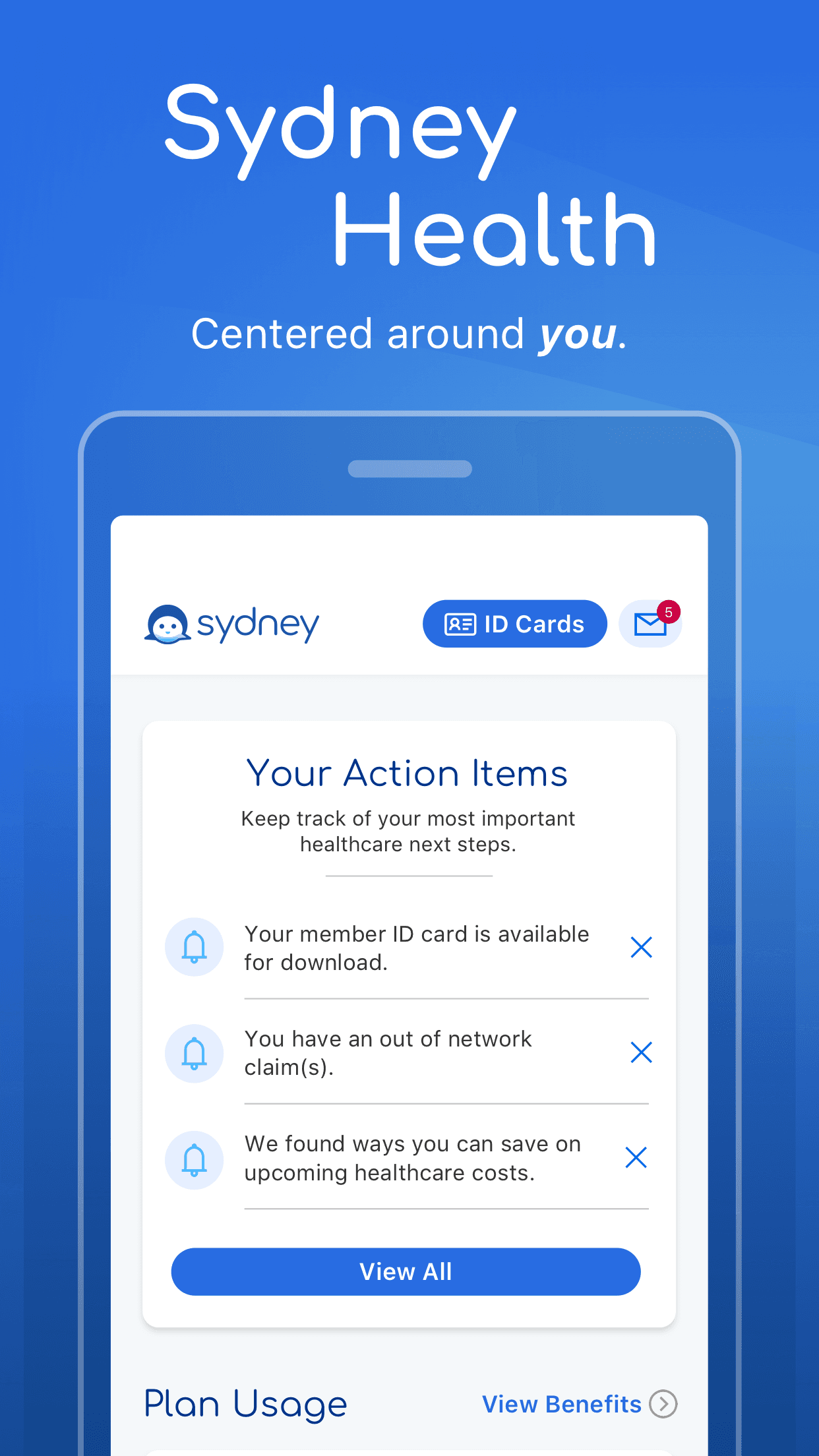
i. Anthem's mobile app for healthcare navigation
ii. Supposed to help students find doctors, check costs, book appointments
iii. Reality: Only 16% adoption
iv. Problems: Complex UX, slow, English-only, broken chatbot
4. What Is ISSO?
i. SCAD's International Student Services Office
ii. Supports international students


International students find it difficult to navigate the U.S. healthcare system. Information is fragmented across multiple platforms, communication barriers exist due to language and medical terminology, and students delay care due to cost confusion—leading to minor health issues escalating into emergencies.

The "First-Timer" who needs hand-holding through every step.

First-year Graduate Student
Mei Zhang (Origin: China)
Mei just arrived at SCAD for her MFA in Graphic Design. She's never used health insurance before and finds the U.S. system completely foreign. Back home in China, she would just walk into a clinic, see a doctor, and pay directly—no insurance, no paperwork.
Diagnosing the friction
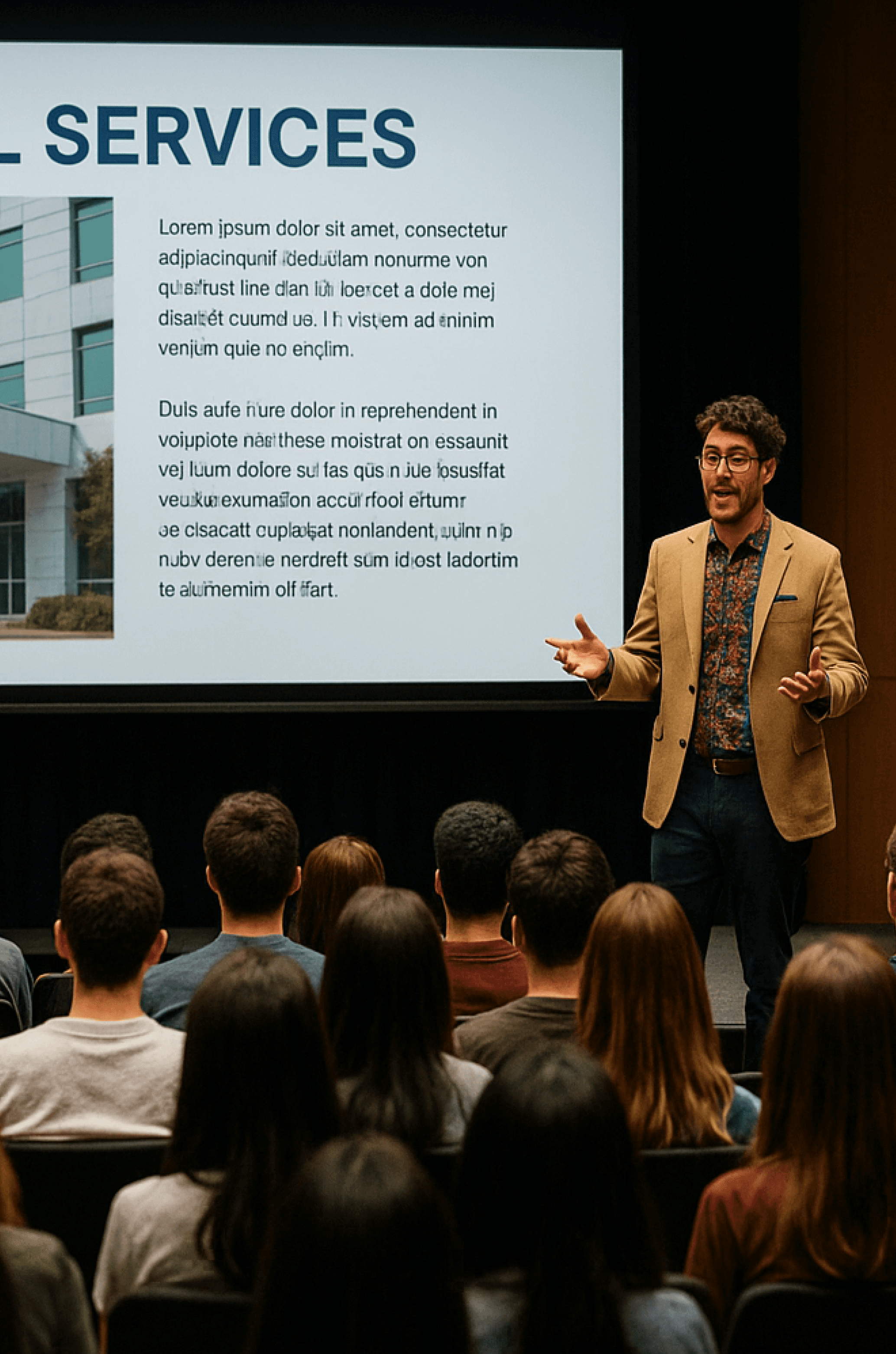
We employed seven research methods: surveys with 57 students, 12 deep interviews, secondary research from 16+ academic sources, co-creation workshops with 8 stakeholders, field observations, competitive benchmarking against ISI and IMG, and three rounds of usability testing with 21 participants.

Seven complementary methods building a layered understanding of international student healthcare journeys.
57 international students, Google Forms, focused on insurance, costs, and access.
Key user outcomes across the end-to-end healthcare journey.
Feedback Loop
Going through the feedback flow of the ecosystem felt like looking at a city where all the bridges are one‑way. Governance, Anthem, and ISSO keep pushing information out, but almost nothing is structurally designed to flow back from students, so issues only surface when something goes very wrong, that’s when I realized our solution had to strengthen feedback, not just add more touchpoints.
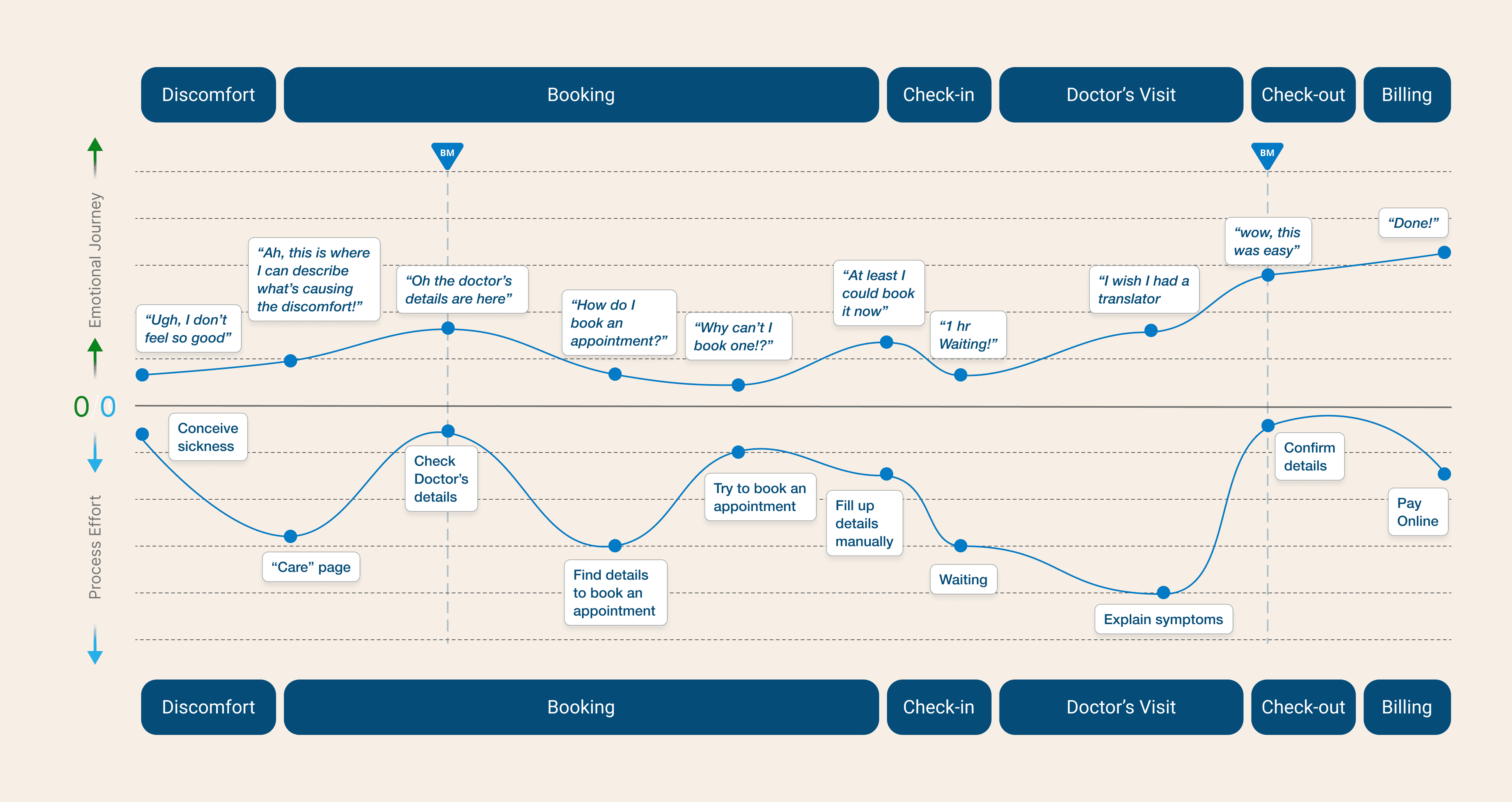
Three Fold Typology Map
As we layered emotions onto the journey, the pattern felt uncomfortably familiar, calm at the start, panic in the middle, exhaustion at the end. It mirrored the stories I heard in interviews, students were okay until something hurts, then suddenly juggling portals, acronyms, and phone trees. Mapping those spikes made our goal painfully clear, flatten the panic and move more of the journey into the “I know what to do next” zone.
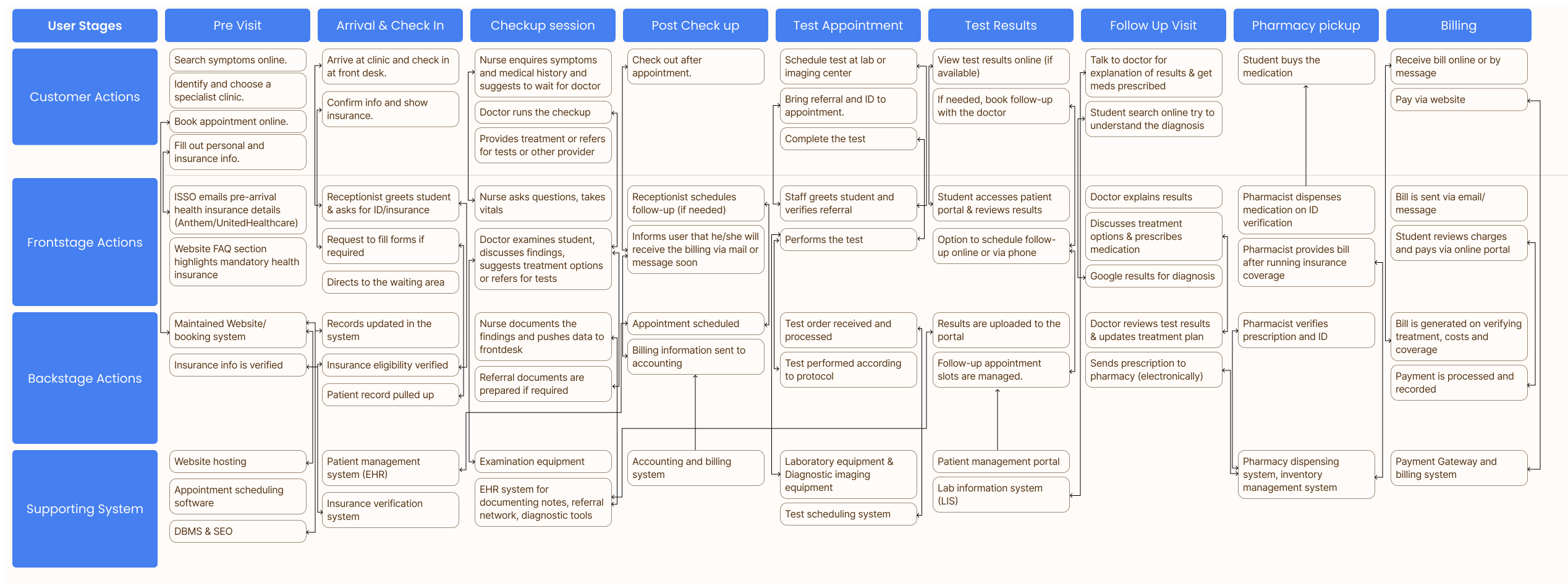
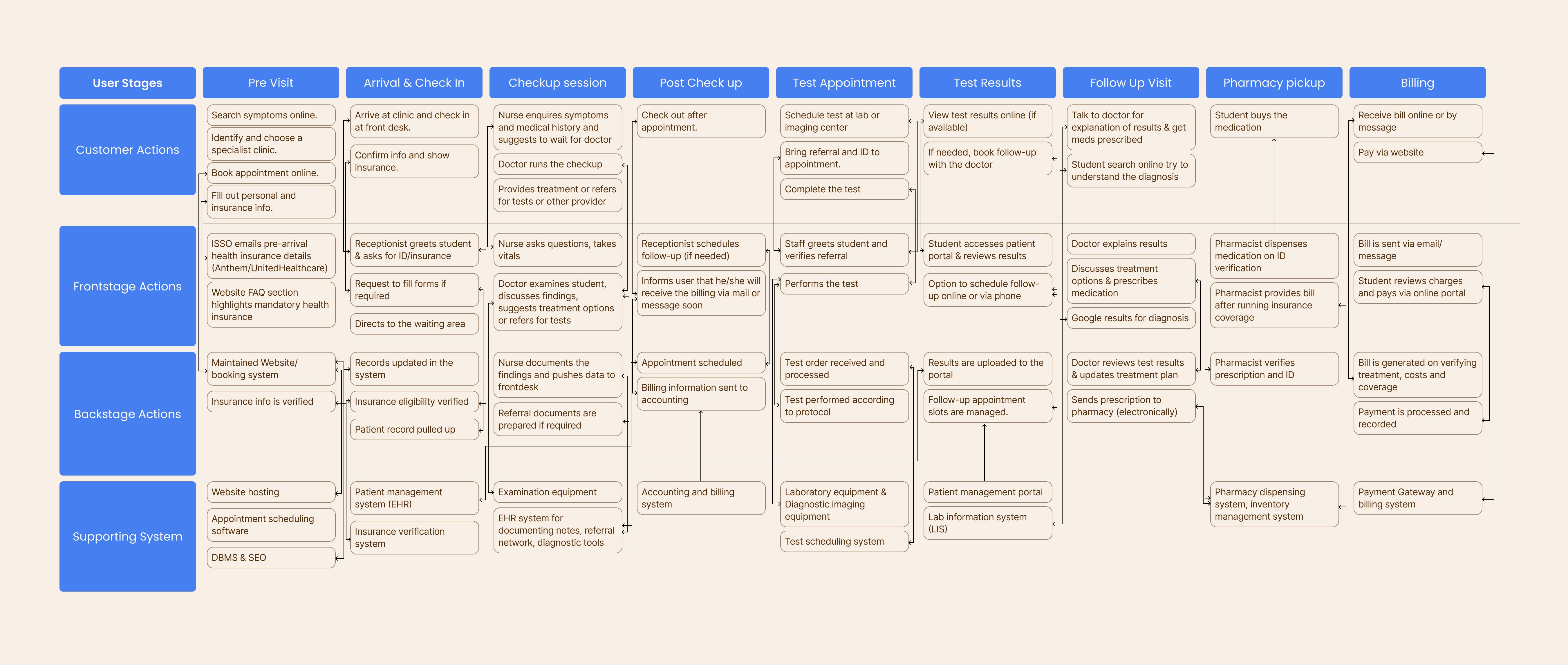
Current State Service Blueprint
When I mapped the current service blueprint, what hit me was how much work the student is doing to glue the system together. Every hand‑off, Sydney to ISSO, ISSO to campus clinic, clinic to insurer, relies on the student to carry information, repeat their story, and chase answers, which means the “service” is really a chain of silos with the student acting as the only integration layer.
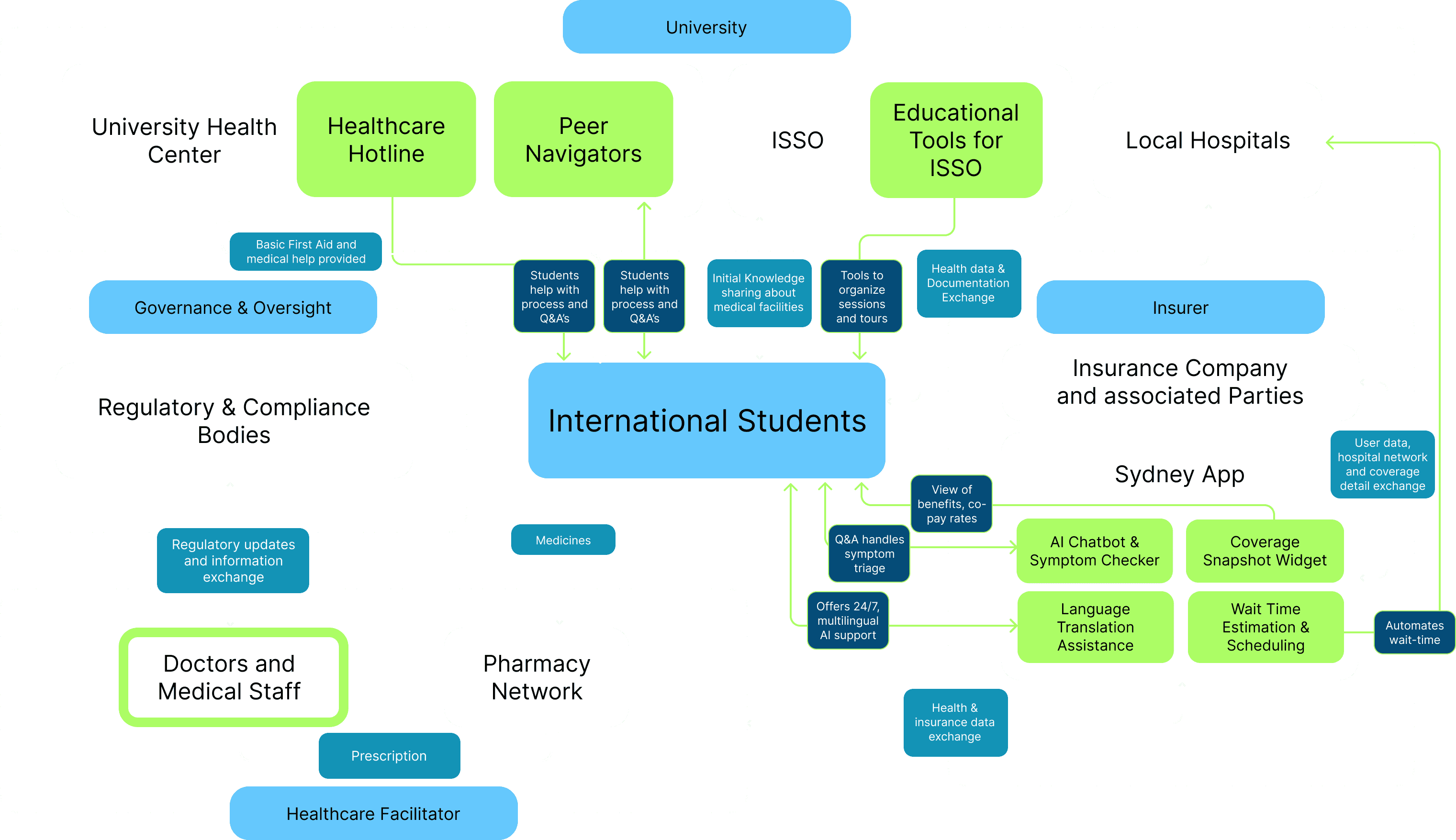
Future State Ecosystem Map
On the future‑state ecosystem map, what changed for me was who is allowed to move first. Instead of students having to hunt separately for ISSO, Sydney, peers, and providers, the map shows Sydney, ISSO, and the Healthcare Facilitator actively pushing help outward—triage, education, and peer support are now coordinated instead of accidental.
The big shift is that students stop being the “connector node” and become the center of a loop where information, translation, and accountability circulate without them having to chase each piece.

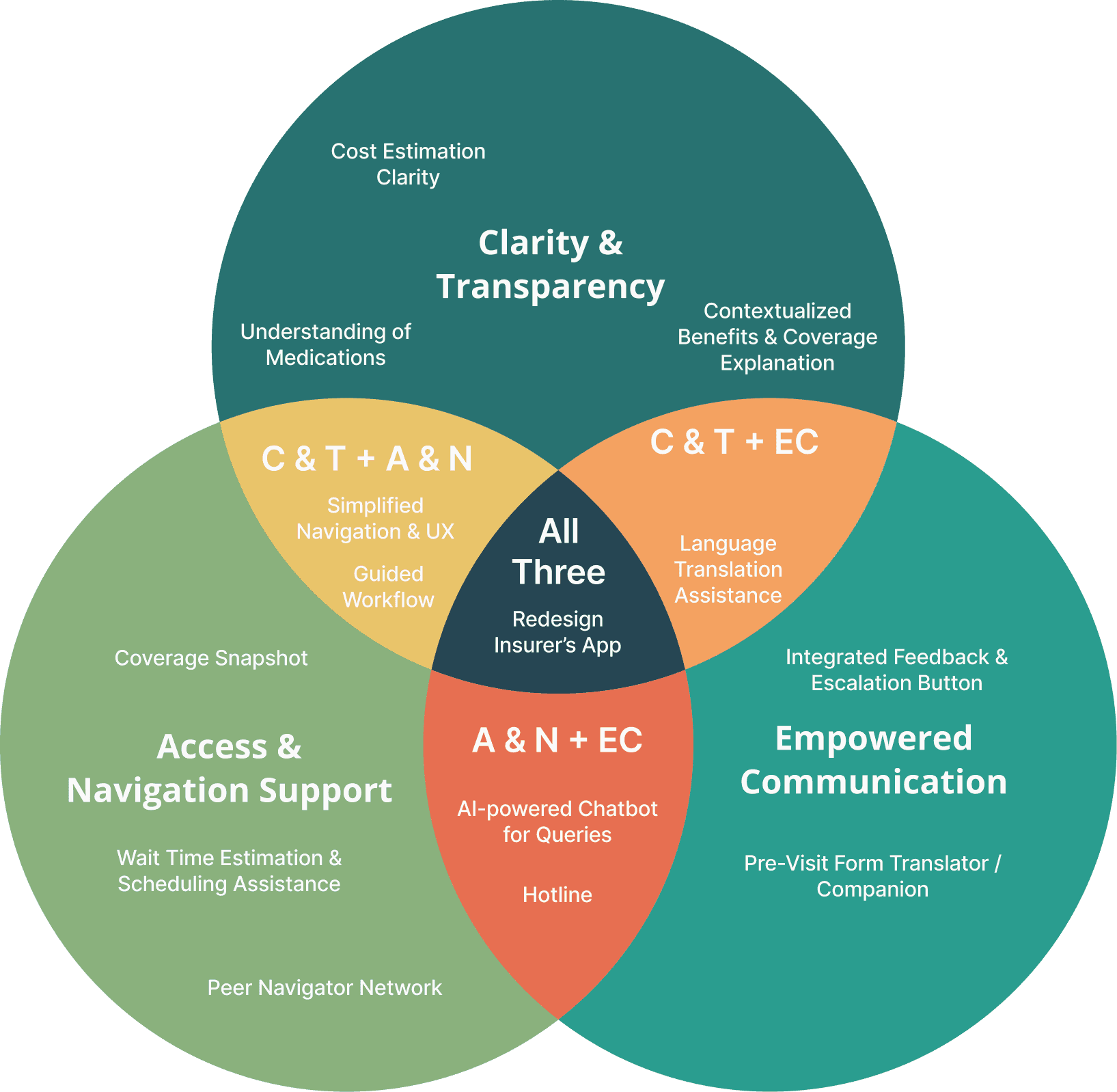
Value Pilllars
We decided to map our solution across three interconnected value pillars to ensure international students receive comprehensive support, not just in understanding their coverage, but in accessing care and communicating effectively throughout their healthcare journey.
C & T + A & N (Yellow): Simplified Navigation & UX, Guided Workflow
C & T + EC (Orange): AI-powered Chatbot for Queries, Hotline, Cost Estimation Clarity
A & N + EC (Red-Orange): Additional support features
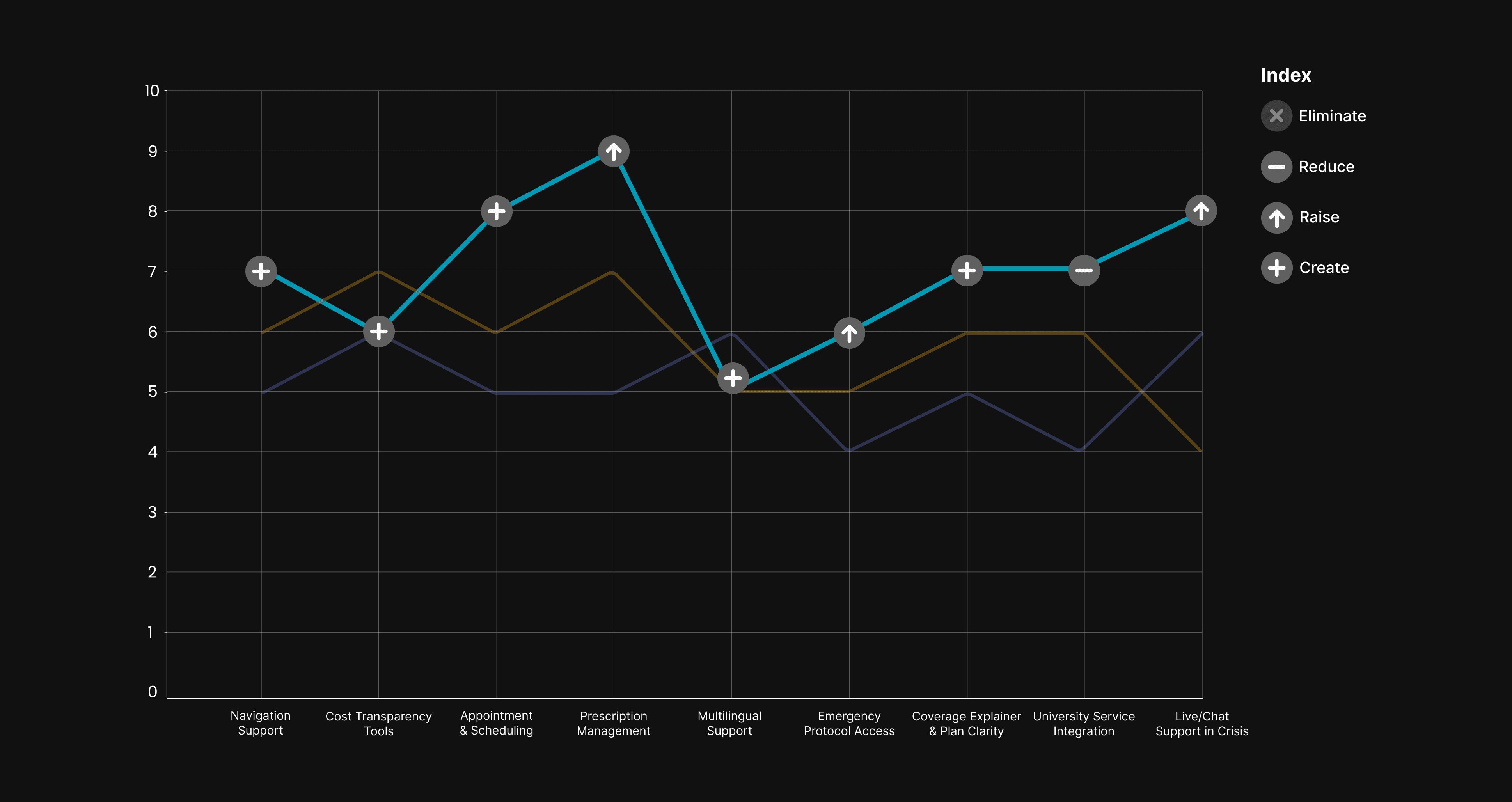
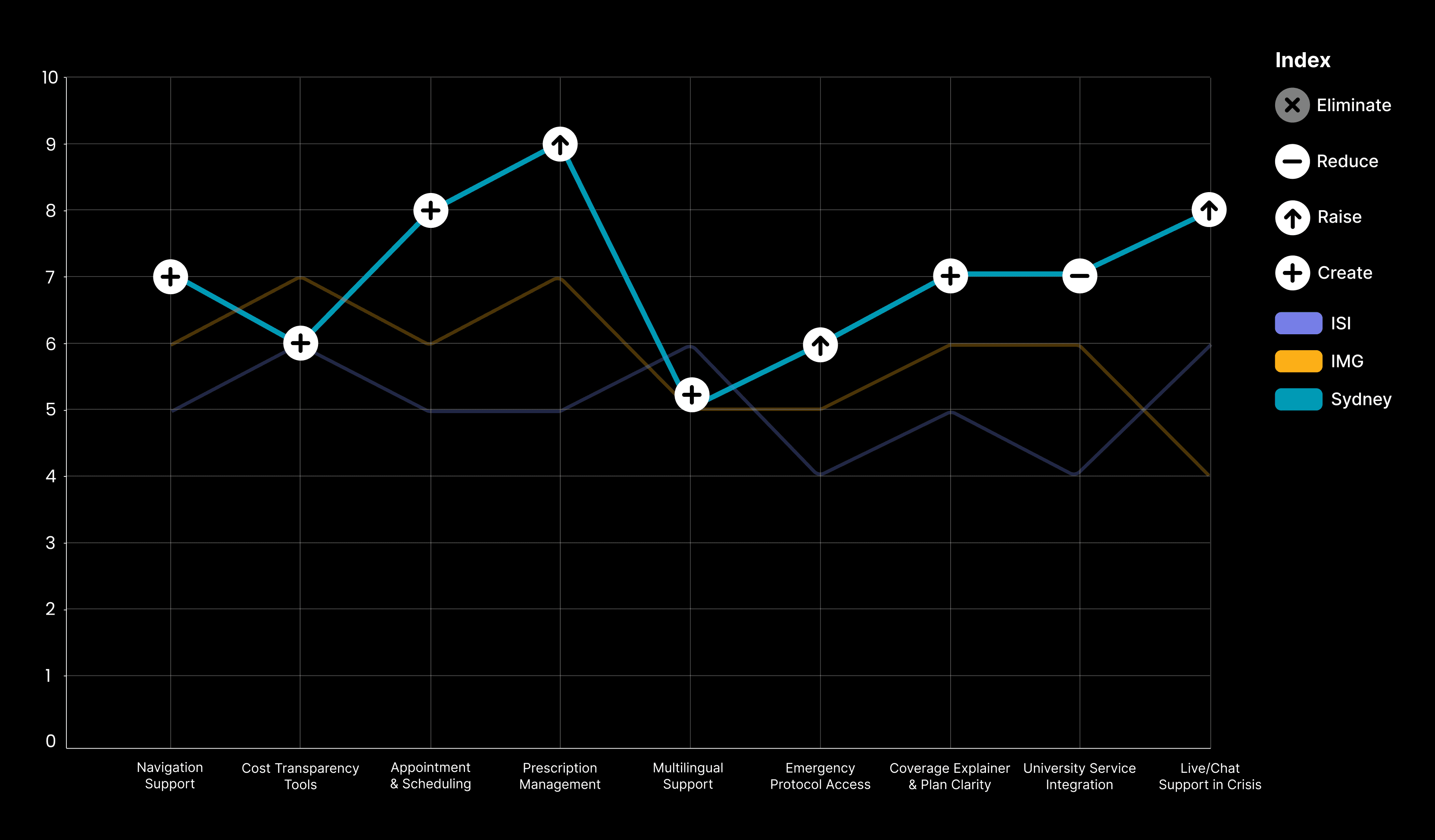
ERRAC Framework
This ERRAC chart helped us see where Sydney actually deserves to be bold, and where it needs to get out of the way.
Across navigation, cost tools, appointments, and crisis support, Sydney’s line consistently sits above ISI and IMG, so I framed those as our “RAISE and CREATE” zones, places to double down with triage, pricing clarity, and live help. The dips at multilingual support and emergency protocol told me exactly where students stop trusting the app, which is why those two categories became non‑negotiable redesign targets.
Job
Current behavior
Opportunity (our solution)
What type of care facility should I use?
Current sources: Google, Friends ❌
Opportunity: Sydney App triage feature ✓
What's covered? What are out-of-pocket costs?
Current sources: Guessing, avoiding care ❌
Opportunity: Upfront cost estimation ✓
How do I schedule or check in for care?
Current sources: Phone calls (30+ min), giving up ❌
Opportunity: One-tap booking ✓
Who prescribes? How do I get it?
Current sources: Pharmacists, Google ❌
Opportunity: Prescription tracker in app ✓
How do I get help if I don't speak English?
Current sources: Bring friends, avoid care ❌
Opportunity: Language Buddy system ✓
When do I call 911? What do I say?
Current sources: Panic, unclear ❌
Opportunity: Emergency guidance in app ✓
We didn't jump straight to pixels. We followed a rigorous prototyping phase to ensure every interaction was validated before final visual polishing.
We translated our wireframes into high-fidelity designs that directly addressed the initial problems identified in research. We designed over 150+ screens across two platforms—Sydney app redesign and SCAD Healthcare Community ensuring every interaction supported students through their healthcare journey.
Multilingual App
This phase focuses on solving one of the major barriers of the communication issues. Many international students find it hard to understand english terminologies resulting in confusions and errors. By making the app multilingual we plan on eliminating those errors and helping students navigate the app comfortably!
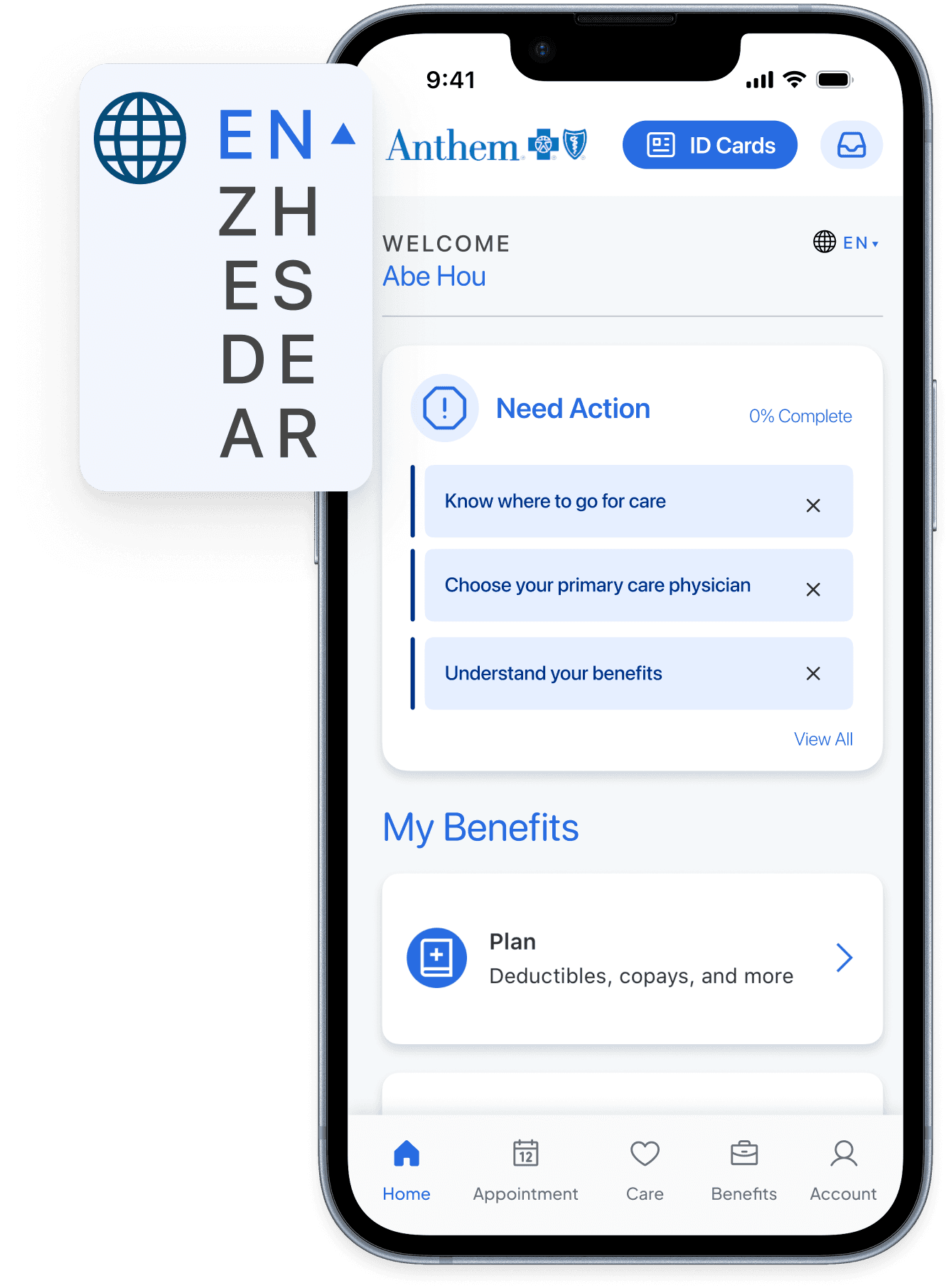
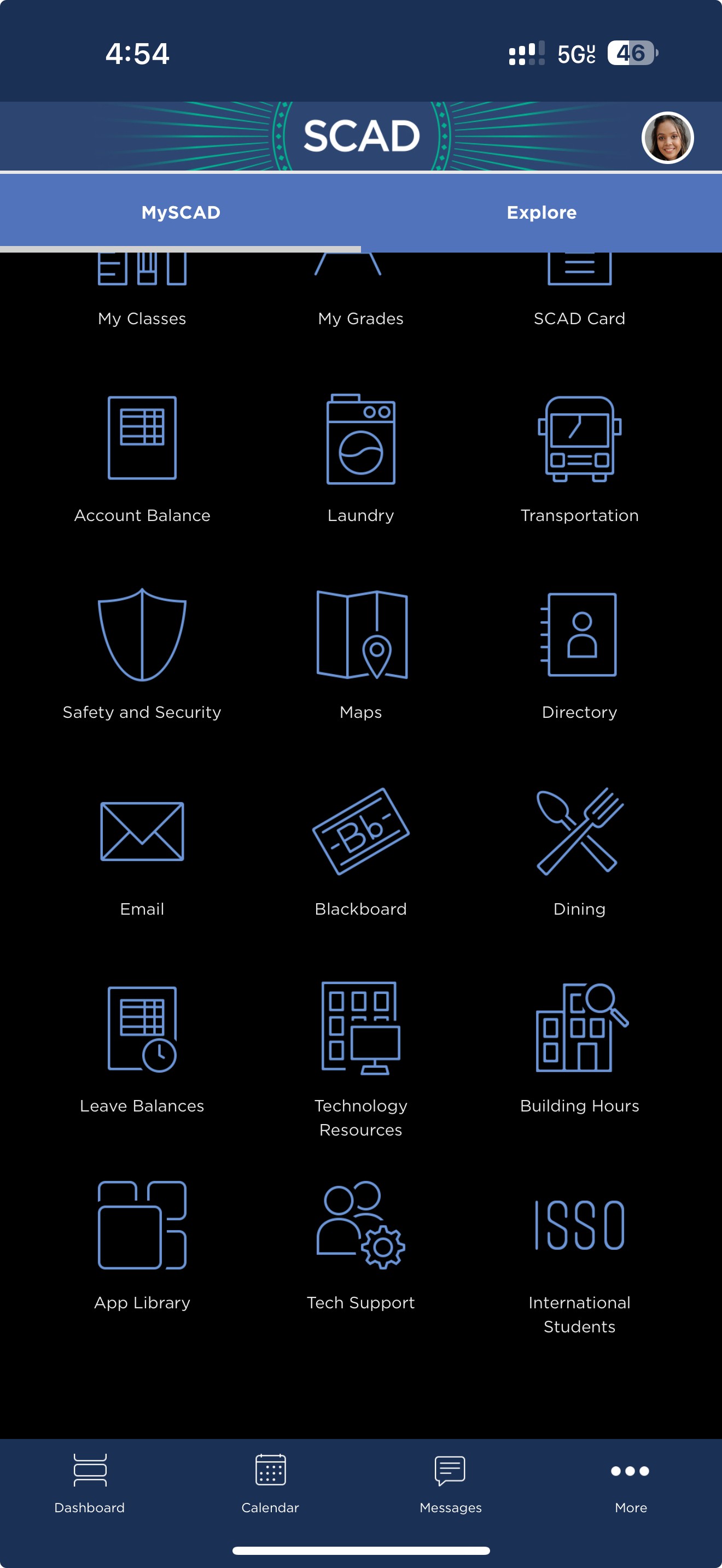
The Healthcare Community is a new section inside the SCAD student app, giving students easy access to peer support. From here, they can ask questions, get help with insurance, and navigate care confidently, all in one place.
Students can request help in their preferred language by booking a peer Language Buddy. The buddy can assist with booking appointments, explaining insurance, or providing live interpretation during doctor visits.
Key outcomes if the solution is fully implemented.
Operational Efficiency
Time saved and fewer repetitive tasks.
40% faster healthcare tasks
Automation removes manual steps for staff and students.
50% fewer ISSO inquiries
Embedded answers reduce repeat questions.
30+ minutes saved per booking
Tap-to-book replaces multi-step phone and email flows.
Student Health Outcomes
Earlier, preventative, and right-fit care.
45% drop in delayed care
From 55% to 10% over 3 years.
60% more preventative visits
Nudges and clarity drive early check-ins.
Earlier intervention
Issues addressed before they become crises.
Cost Savings
Lower spend for students and partners.
$200 annual savings per student
Optimized care paths avoid unnecessary costs.
50% fewer inappropriate ER visits
Guidance reduces preventable ER spend.
Lower call center volume
Self-service journeys reduce tickets.
User Experience
Delightful, multilingual digital journeys.
92% would use Language Buddy
Peer guides close cultural and language gaps.
85% prefer app-based booking
Mobile flows match how students live.
Satisfaction 2.5 → 4.5 / 5
Clearer journeys rebuild trust in care.
14-language support
Multilingual content increases access.
Institutional Benefits
Strategic gains for SCAD and Anthem.
Retention: 88% → 92%
Better health and support keep students enrolled.
Stronger SCAD–Anthem partnership
Shared outcomes and data deepen trust.
Scalable to 1.1M+ intl. students
A playbook ready for other campuses.
Recruitment advantage
Differentiated health offer in marketing.
Brand lift and trust
Visible care for international students.
Navigating Complex Healthcare Ecosystems
I learned how to map and understand multi-stakeholder healthcare systems, insurance providers, university health services, medical providers, and patients all operating with different priorities. This taught me how to identify leverage points where small changes create ripple effects across the entire ecosystem.
Designing for Vulnerable Moments
Healthcare isn't transactional, people interact with it when they're sick, scared, and vulnerable. I learned to design for high-stress, low-literacy moments where clarity and reassurance matter more than efficiency. This changed how I think about information hierarchy and emotional touchpoints.
Understanding Healthcare Operations and Constraints
Learning about EHS systems, HIPAA compliance, insurance claims processing, and backend workflows taught me that patient experience is only half the equation. I learned to design solutions that work within regulatory constraints and operational realities, not just idealistic fixes that can't be implemented.
Thinking in Systems, Not Just Screens
This project taught me that healthcare service design means understanding how front-stage, back-stage, and support systems interact. I learned to trace problems to their root causes in invisible processes like how a broken insurance verification step creates anxiety for students weeks later.
Leading Through Ambiguity in Sensitive Spaces
Healthcare research requires careful facilitation people don't easily share medical stories. I learned how to build trust quickly, ask sensitive questions ethically, and synthesize emotionally heavy research into actionable insights without losing the human context.
International students face challenges navigating the U.S. healthcare system, including information gaps and communication barriers. Many struggle with medical terminology, and non-native English speakers find it difficult to understand healthcare processes.
Additionally, unclear appointment procedures and concerns about costs often lead them to delay necessary care, causing minor health issues to worsen into serious conditions requiring emergency intervention.
We redesigned the healthcare journey across three platforms: Anthem's Sydney app, SCAD's student app, and orientation materials.
Healthcare Community
9:41
Home
Appointment
Care
Benefits
Account
ID Cards
WELCOME
EN
Abe Hou
My Benefits
Need Action
0% Complete
View All
Know where to go for care
Choose your primary care physician
Understand your benefits
EN
ZH
ES
DE
AR
We added multilingual support (14 languages), AI-guided symptom triage, upfront cost estimation, and peer-driven Language Buddy system. We prototyped everything in Figma through 3 rounds of testing with students, validating every interaction before final implementation.