










57
survey responses
Survey distributed among international students at SCAD.
I led a service design project to understand why international students struggle to navigate the U.S. healthcare system, and to redesign how their insurer’s digital tools support them across the entire care journey.
How did it all start?
During spring 2025 | collaborated with 5 designers for a project, all of us being international students could resonate with the topic of healthcare, we could all resonate with the fact that the healthcare for international students in the US seems broken and we decided to sail our ship to explore the industry, SCAD being our immediate resource for audience we decided to focus our primary research there.
Problem
International students face challenges navigating the U.S. healthcare system, including information gaps and communication barriers. Many struggle with medical terminology, and non-native English speakers find it difficult to understand. Additionally, unclear appointment procedures and concerns about costs often lead them to delay necessary care, causing minor health issues to worsen into serious conditions requiring emergency intervention.
Research
Research methodologies
Secondary Research (Case studies, Literature Review, Industry Reports & Market Data)
Qualitative Research (User Interviews, Focus Groups, Ethnographic Observation)
Quantitative Research (Surveys, Insurance claim analysis, Comparative Benchmarking)
Co-creation Workshops
Three Fold Typology Map
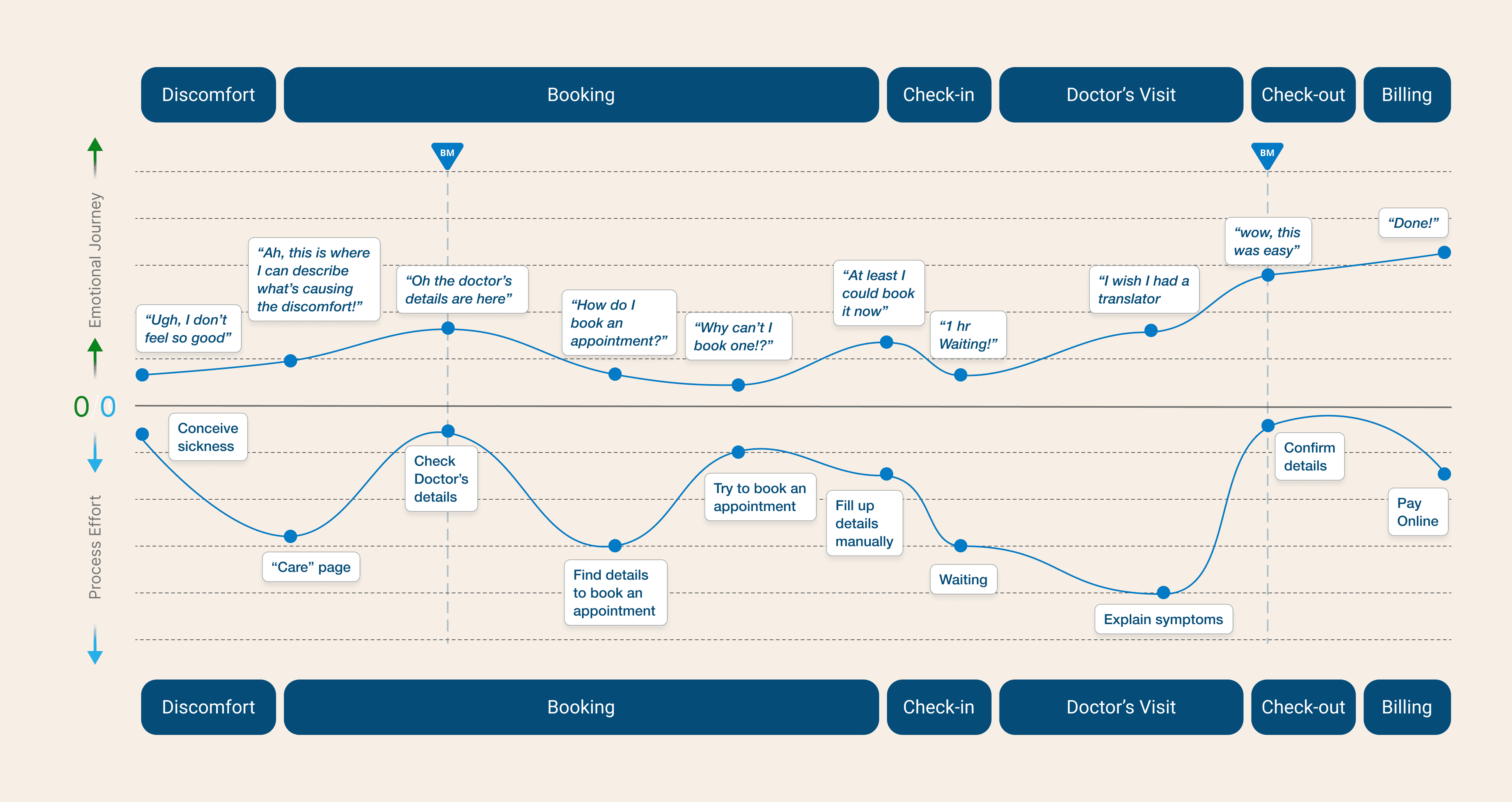
As we layered emotions onto the journey, the pattern felt uncomfortably familiar: calm at the start, panic in the middle, exhaustion at the end. It mirrored the stories I heard in interviews, students were okay until something hurts, then suddenly juggling portals, acronyms, and phone trees. Mapping those spikes made our goal painfully clear, flatten the panic and move more of the journey into the “I know what to do next” zone.
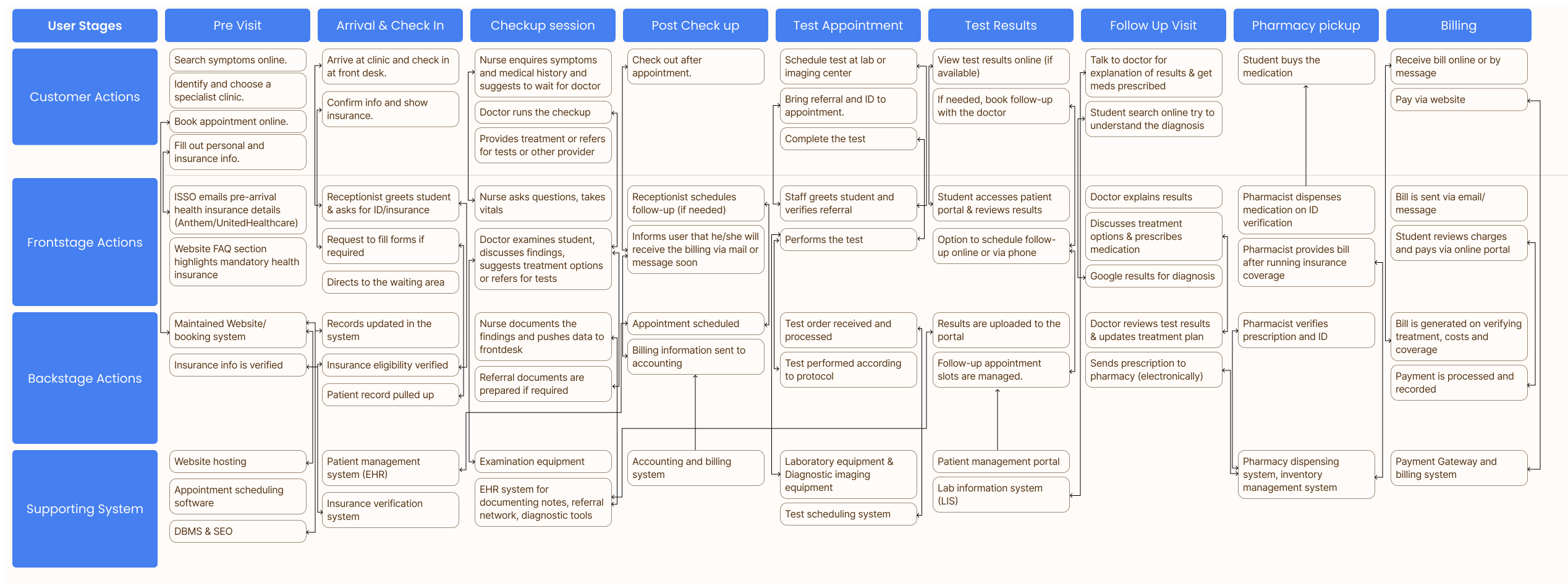
Current State Service Blueprint
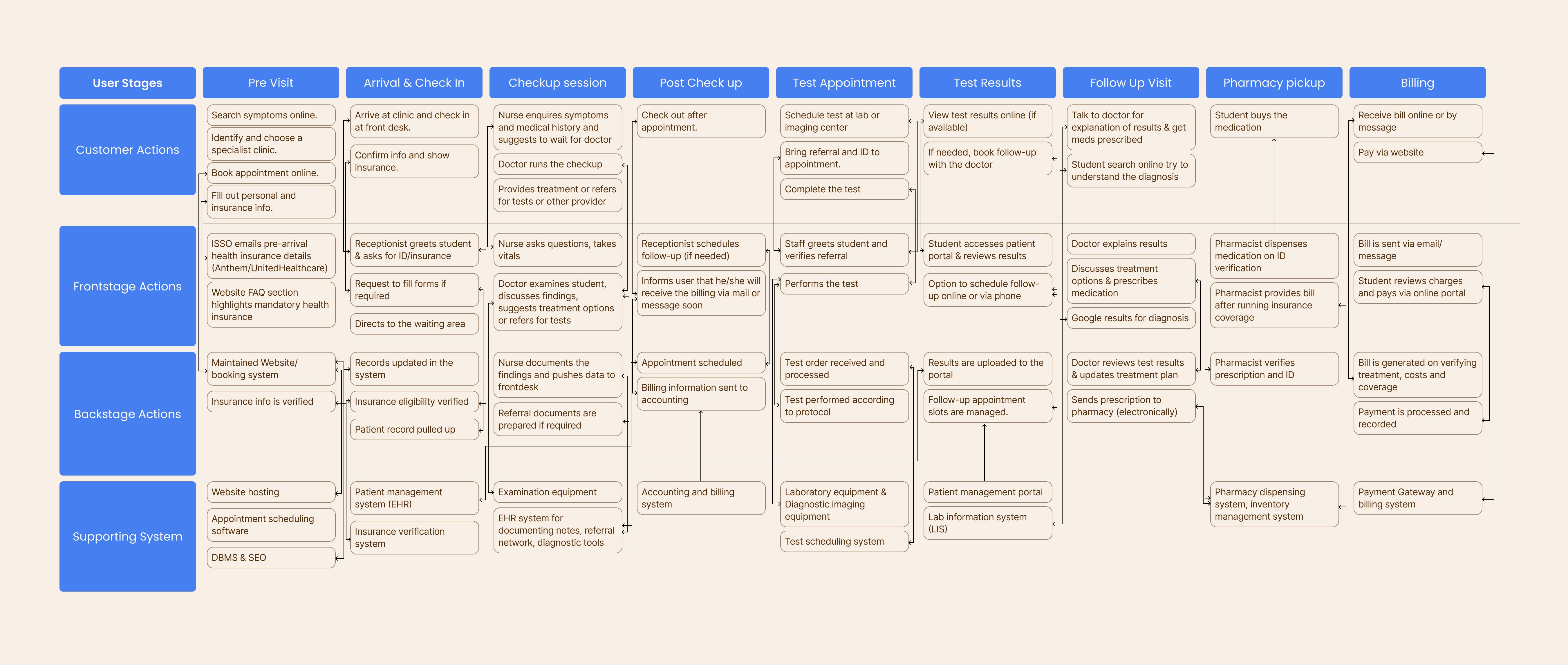
When I mapped the current service blueprint, what hit me was how much work the student is doing to glue the system together. Every hand‑off, Sydney to ISSO, ISSO to campus clinic, clinic to insurer, relies on the student to carry information, repeat their story, and chase answers, which means the “service” is really a chain of silos with the student acting as the only integration layer.
Competitor Analysis
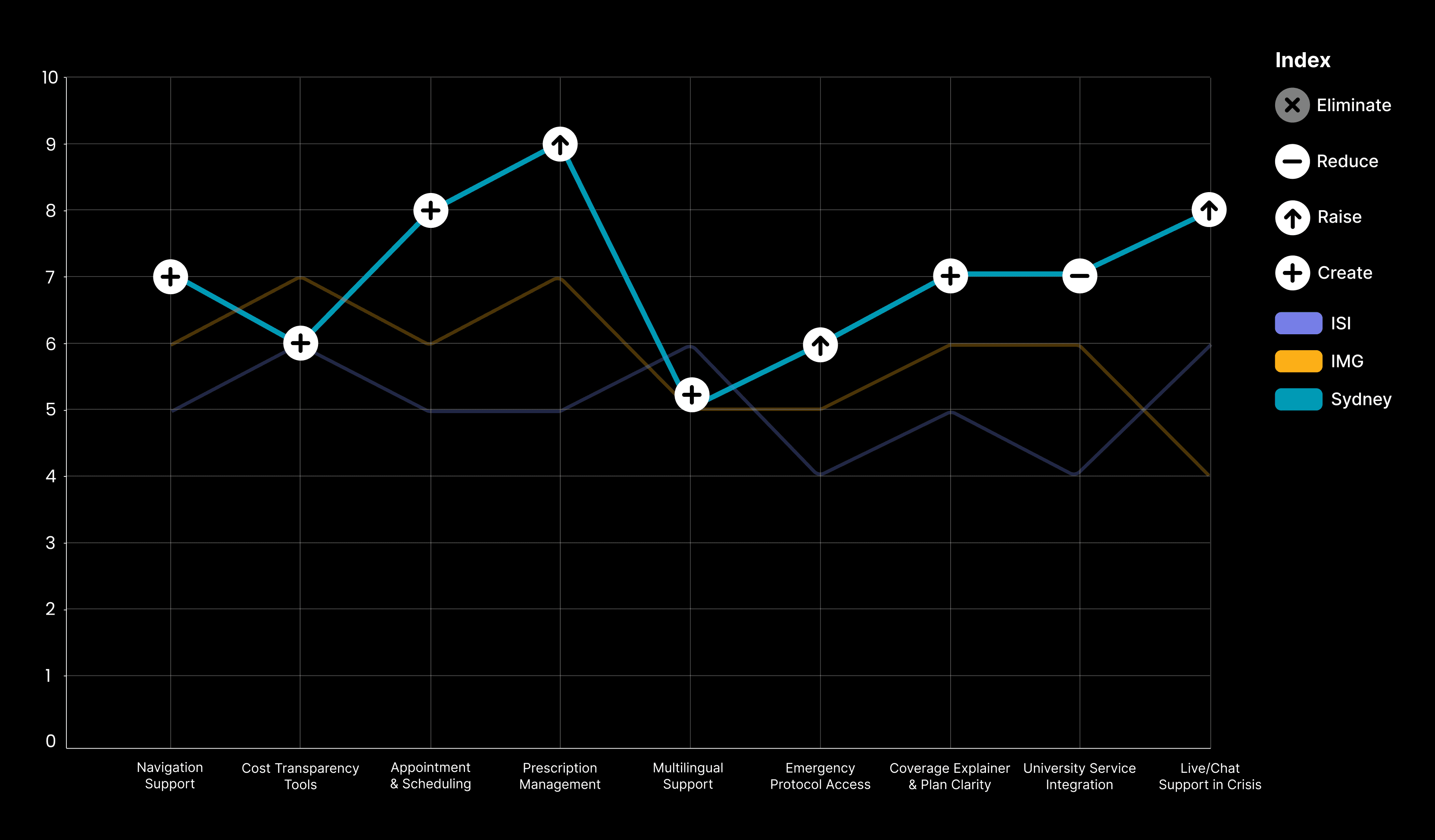
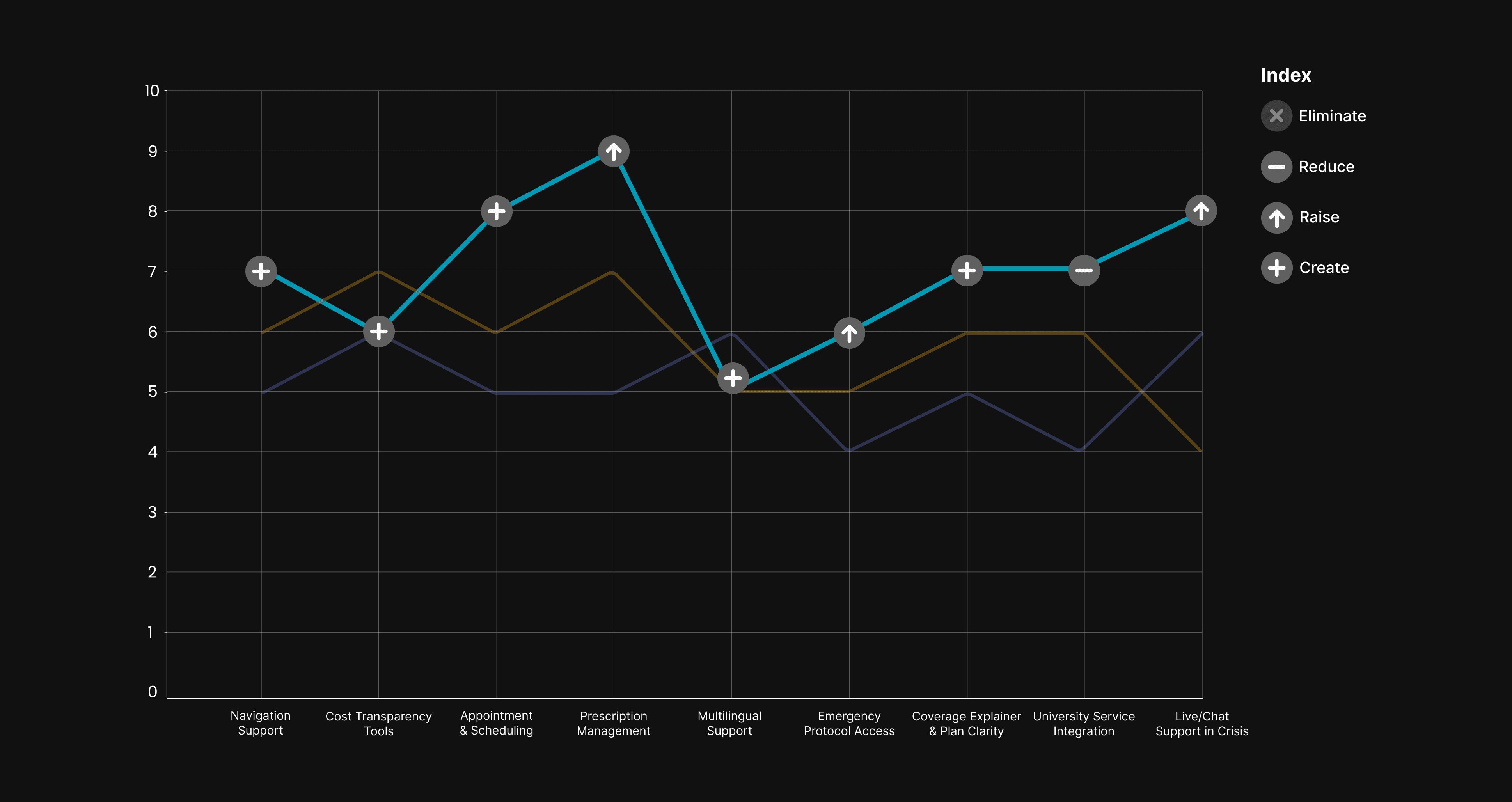
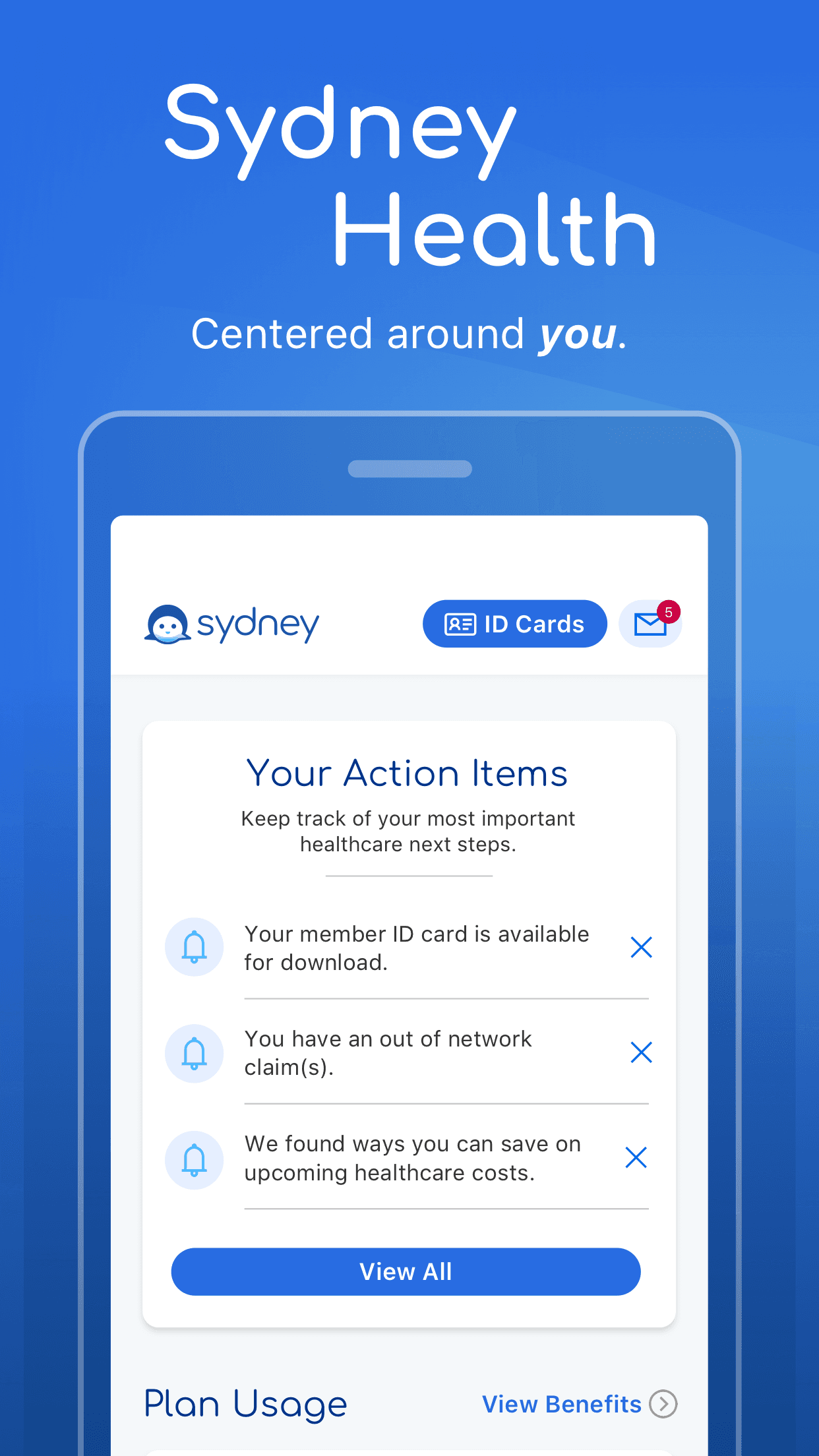
I benchmarked Anthem’s Sydney app against three student‑focused competitors. During this review we discovered that one major competitor doesn’t offer a mobile app at all a clear gap in digital support for students and an opportunity for Anthem to differentiate.
Value Pillars
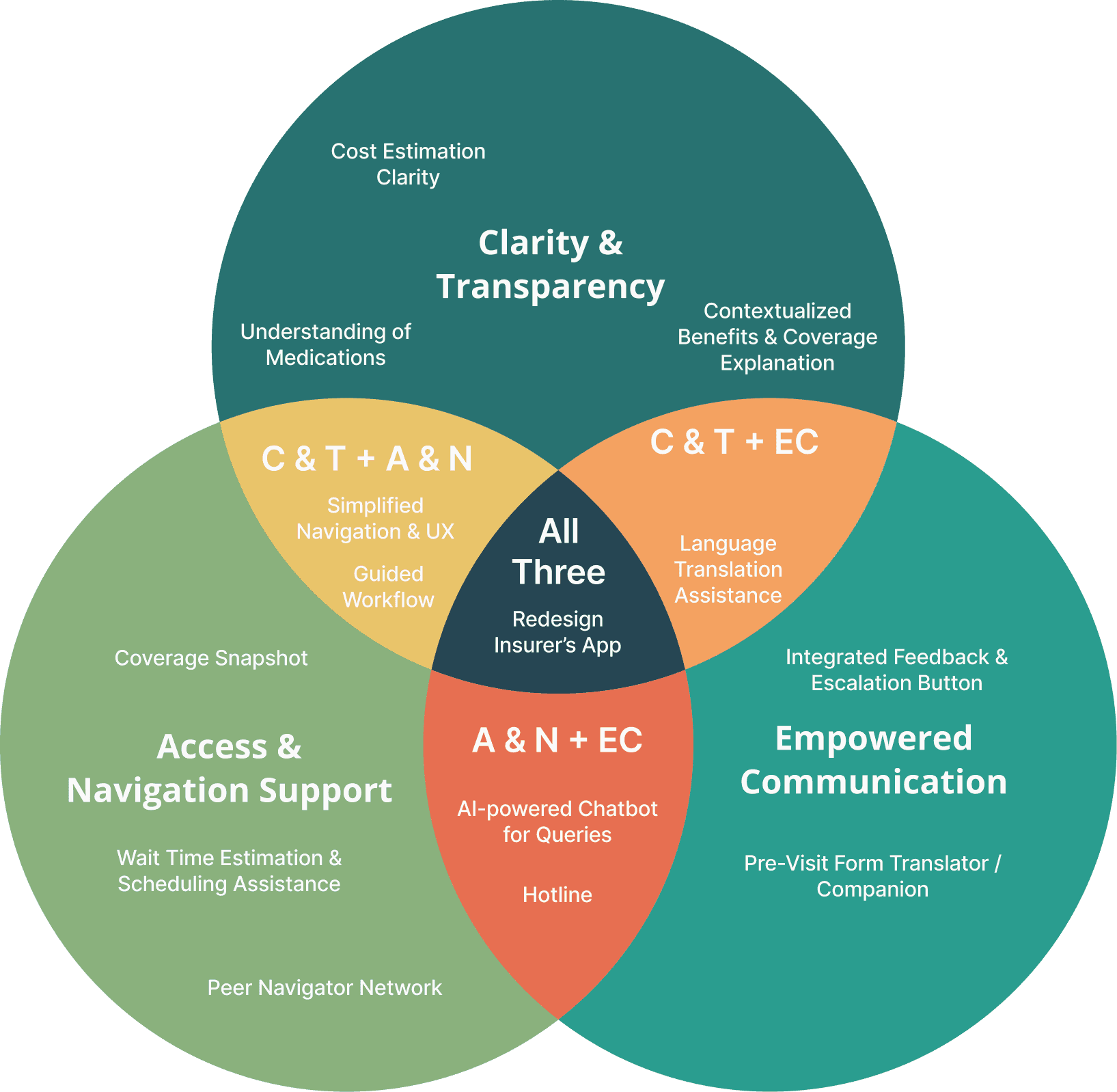
We decided to map our solution across three interconnected value pillars to ensure international students receive comprehensive support, not just in understanding their coverage, but in accessing care and communicating effectively throughout their healthcare journey.
C & T + A & N (Yellow): Simplified Navigation & UX, Guided Workflow
C & T + EC (Orange): AI-powered Chatbot for Queries, Hotline, Cost Estimation Clarity
A & N + EC (Red-Orange): Additional support features
Future State Ecosystem
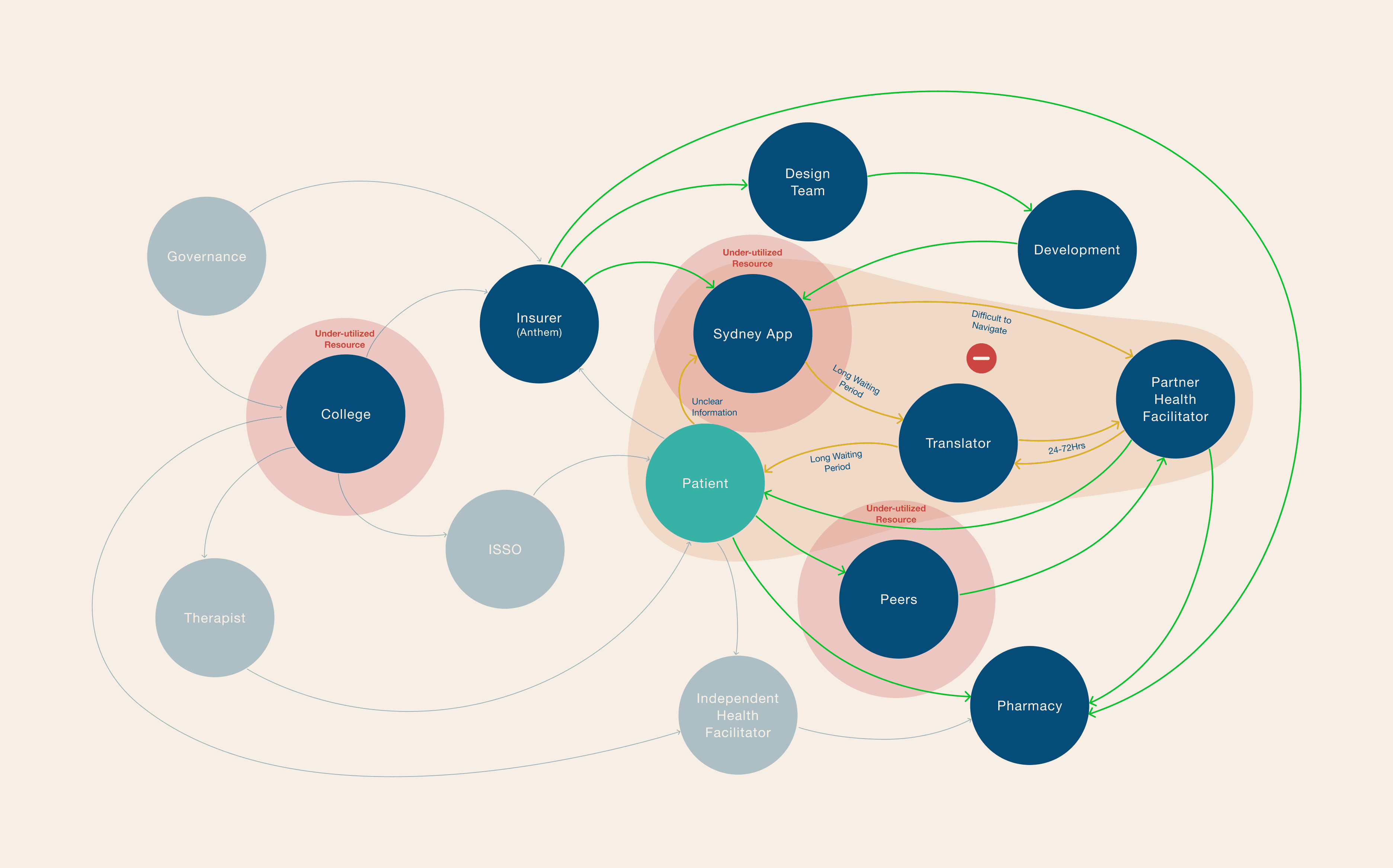
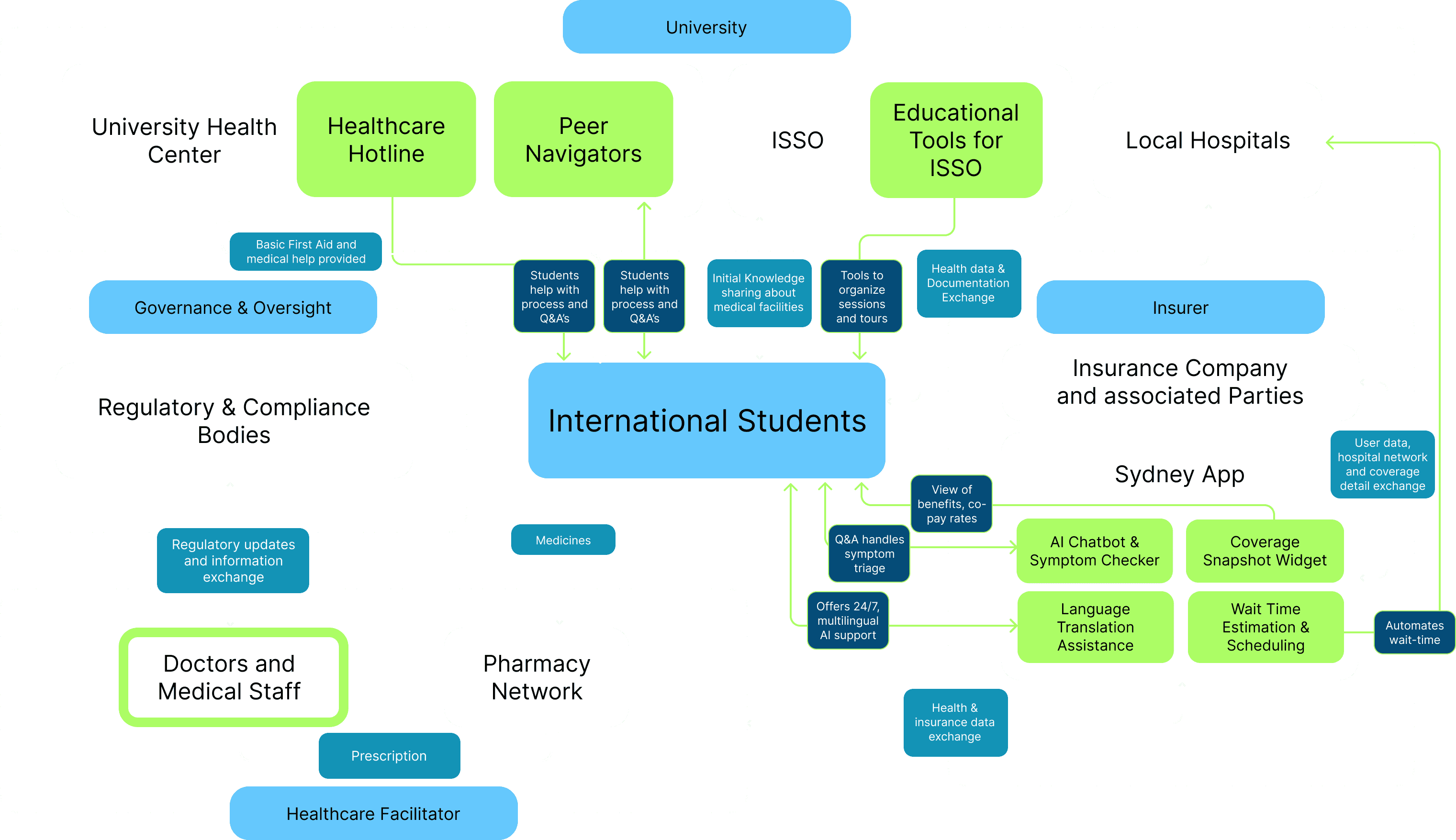
On the future‑state ecosystem map, what changed for me was who is allowed to move first. Instead of students having to hunt separately for ISSO, Sydney, peers, and providers, the map shows Sydney, ISSO, and the Healthcare Facilitator actively pushing help outward—triage, education, and peer support are now coordinated instead of accidental.
The big shift is that students stop being the “connector node” and become the center of a loop where information, translation, and accountability circulate without them having to chase each piece.

Solution
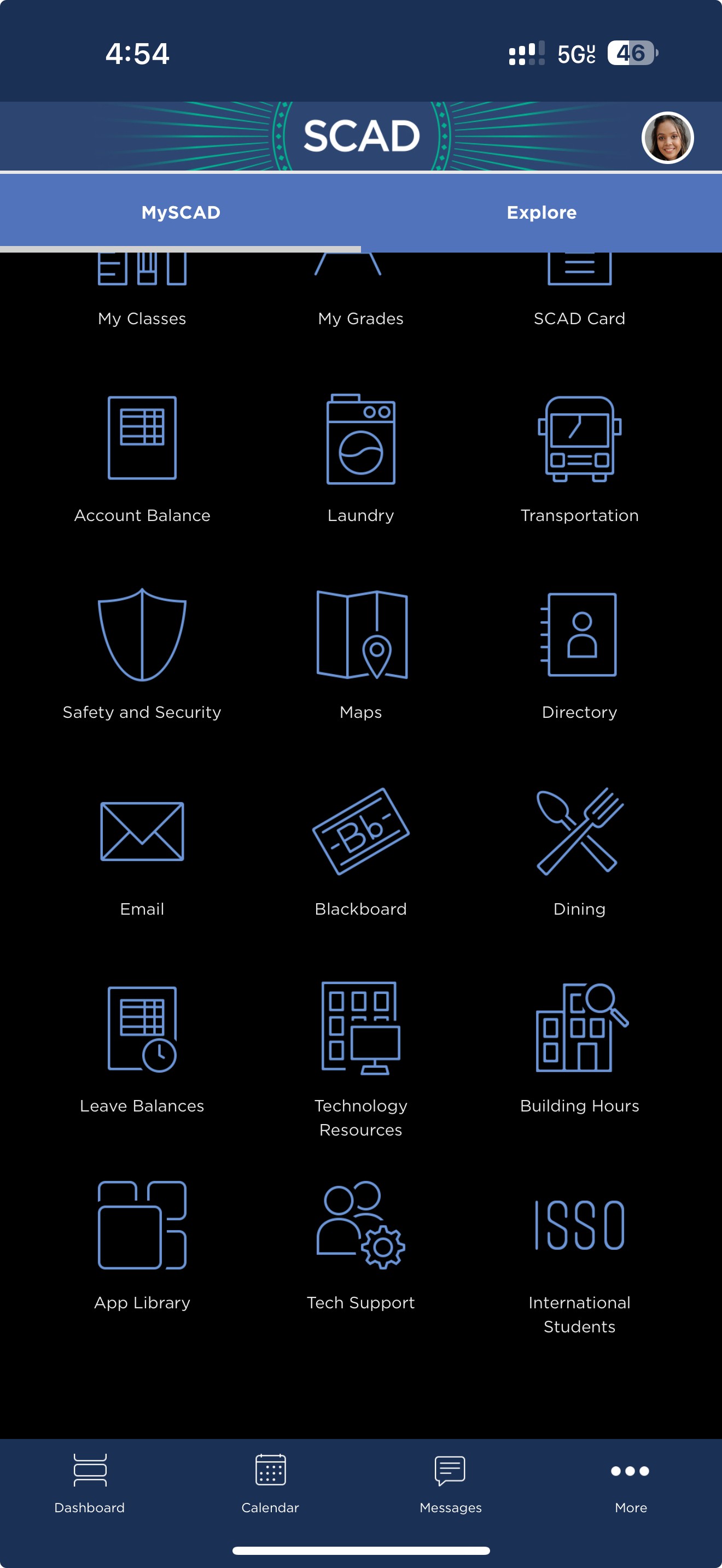
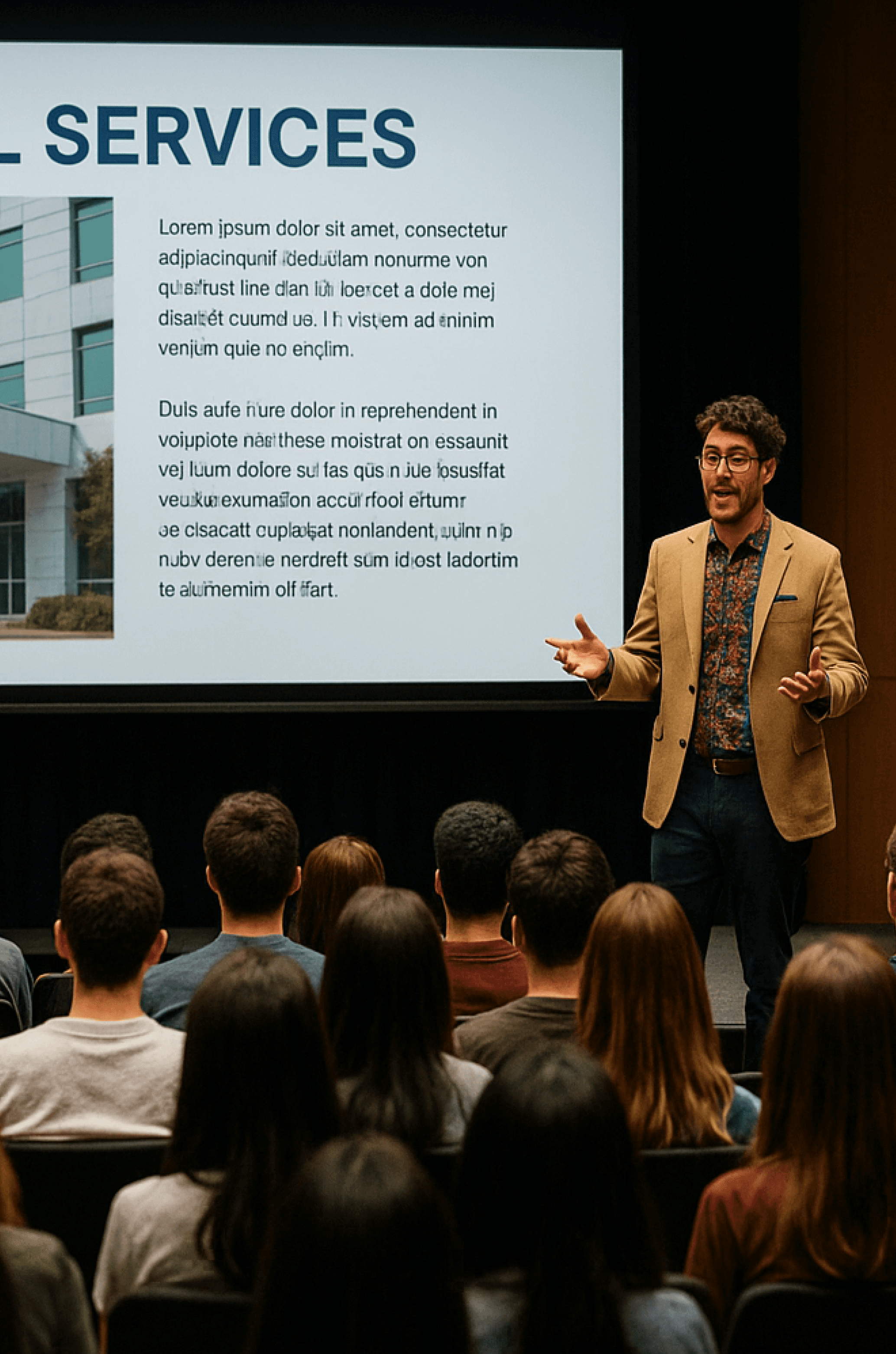
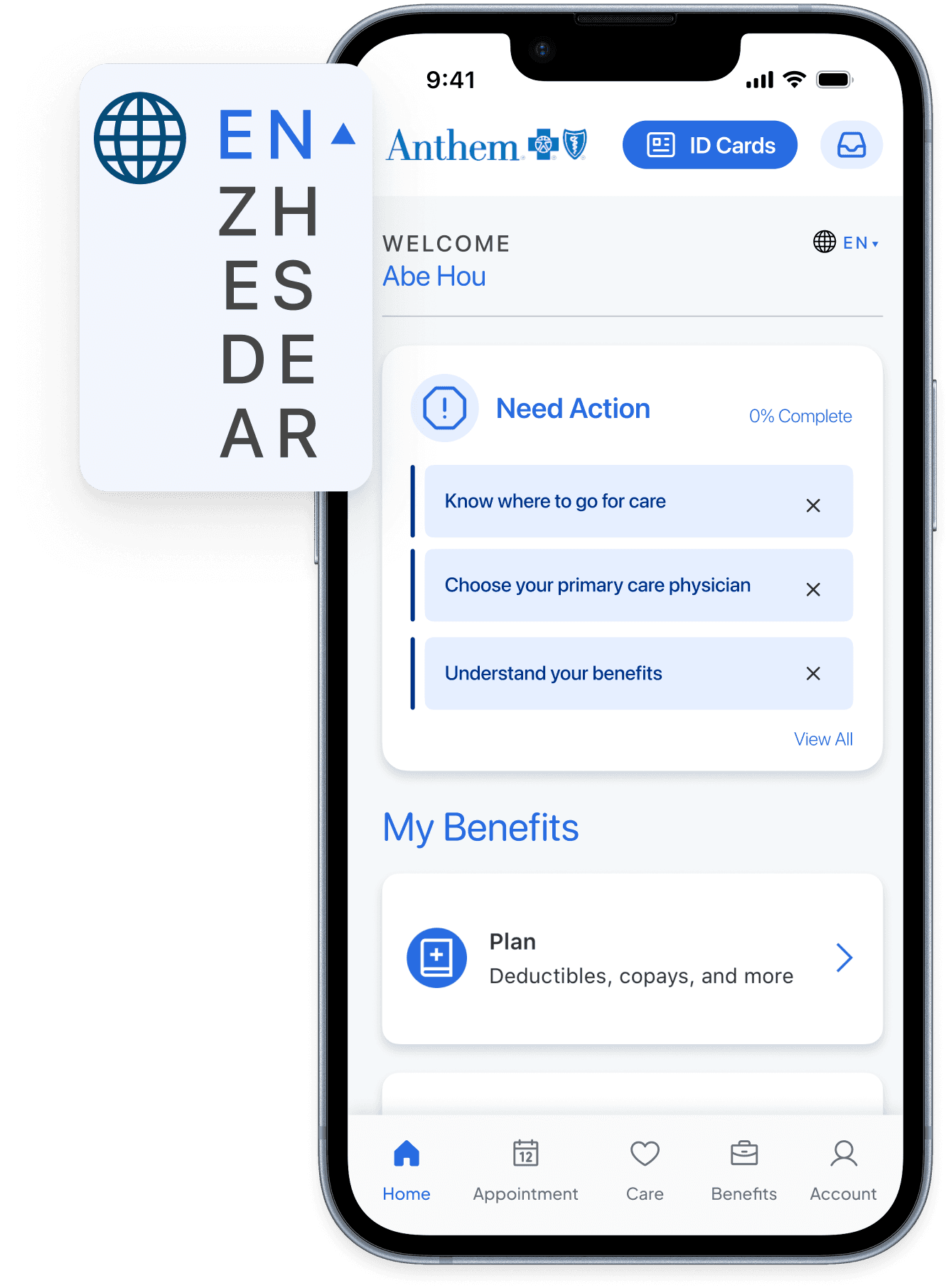
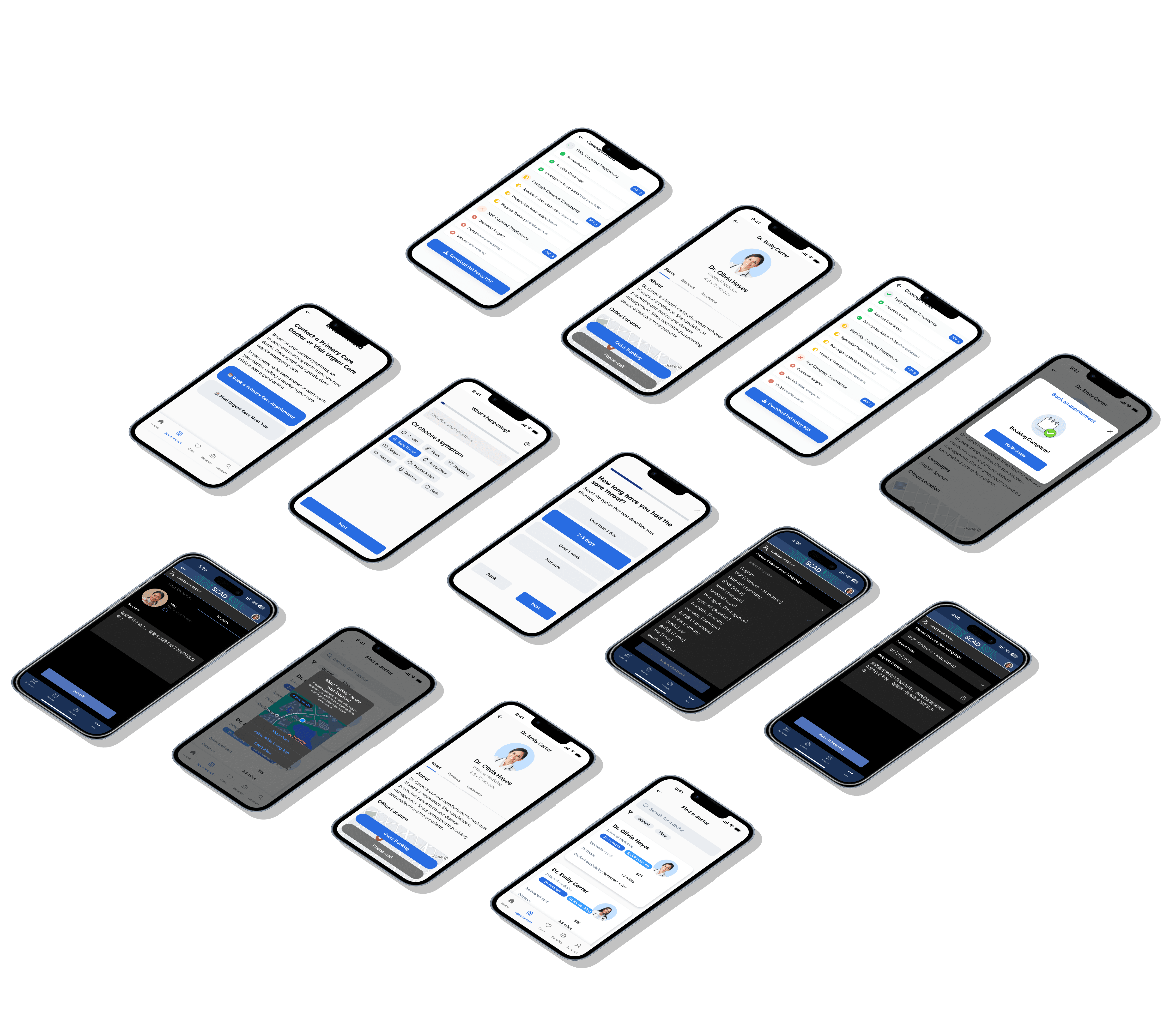
Our solution focuses on making enhancements in the SCAD's application, the Anthem's Sydney App and slide deck and document delivery of the orientation presentation.
Solution : SCAD Student App
The Healthcare Community is a new section inside the SCAD student app, giving students easy access to peer support. From here, they can ask questions, get help with insurance, and navigate care confidently, all in one place.
Students can request help in their preferred language by booking a peer Language Buddy. The buddy can assist with booking appointments, explaining insurance, or providing live interpretation during doctor visits.
My Learnings
Navigating Complex Healthcare Ecosystems
I learned how to map and understand multi-stakeholder healthcare systems, insurance providers, university health services, medical providers, and patients all operating with different priorities. This taught me how to identify leverage points where small changes create ripple effects across the entire ecosystem.
Designing for Vulnerable Moments
Healthcare isn't transactional, people interact with it when they're sick, scared, and vulnerable. I learned to design for high-stress, low-literacy moments where clarity and reassurance matter more than efficiency. This changed how I think about information hierarchy and emotional touchpoints.
Understanding Healthcare Operations and Constraints
Learning about EHS systems, HIPAA compliance, insurance claims processing, and backend workflows taught me that patient experience is only half the equation. I learned to design solutions that work within regulatory constraints and operational realities, not just idealistic fixes that can't be implemented.
Thinking in Systems, Not Just Screens
This project taught me that healthcare service design means understanding how front-stage, back-stage, and support systems interact. I learned to trace problems to their root causes in invisible processes like how a broken insurance verification step creates anxiety for students weeks later.
Leading Through Ambiguity in Sensitive Spaces
Healthcare research requires careful facilitation people don't easily share medical stories. I learned how to build trust quickly, ask sensitive questions ethically, and synthesize emotionally heavy research into actionable insights without losing the human context.
End of Project